
Seasonal Car Care: What to Check Before Every Season Changes

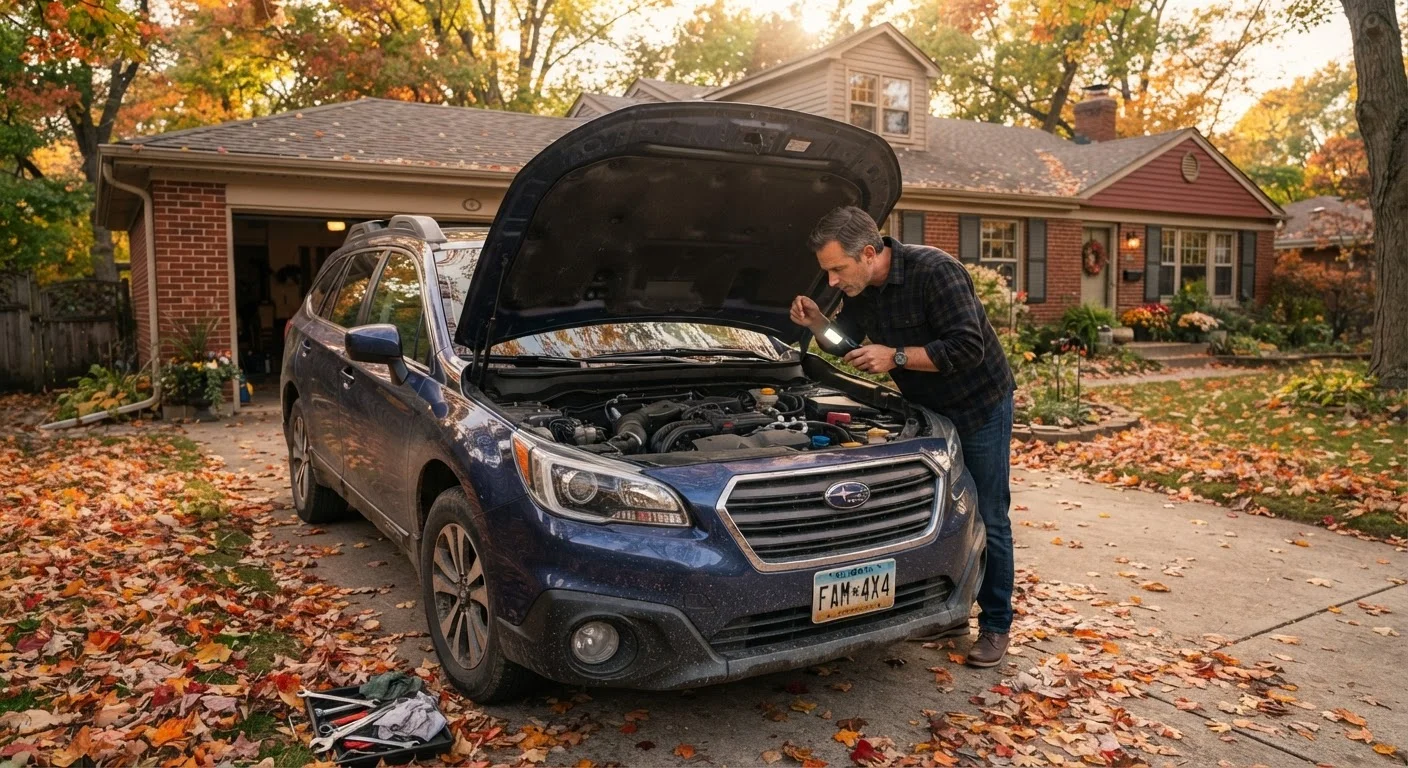
A practical checklist covering the fluids, tires, lights, and filters to inspect as the weather shifts each season.
Summary
22 items · 30 to 60 minutes
Key takeaways
- Checking fluids, tires, and lights before each season change takes less than an hour.
- Tires lose roughly 1 PSI for every 10-degree drop in temperature, so pressure checks are especially important in fall.
- Wiper blades and cabin air filters are two low-cost items drivers commonly overlook until they fail.
- Most seasonal checks require no special tools and can be done safely in your driveway.
- Your owner's manual is the most reliable source for fluid specs and service intervals specific to your vehicle.
Why seasonal checks matter
Weather shifts put real stress on a car. Cold thickens engine oil, heat accelerates coolant breakdown, and freeze-thaw cycles wear on rubber seals and hoses. A car that ran fine through summer can surprise you in November if no one checked a thing before the temperature dropped.
The good news is that most of these checks cost nothing beyond your time. You don't need a lift, a mechanic's training, or an expensive scan tool. A flashlight, a tire gauge, and 45 minutes in the driveway will cover the majority of items on this list. For a broader introduction to what you can safely do at home, see our DIY car maintenance guide for beginners.
Run through this checklist four times a year, once before each season, and you'll catch small problems before they become roadside emergencies.
Tire pressure gauge
Checks inflation in each tire to verify PSI against the door placard spec.
Flashlight or headlamp
Illuminates the engine bay, undercarriage, and tire sidewalls for visual inspection.
Clean lint-free rags
Used to wipe dipsticks clean before re-inserting to get an accurate fluid reading.
Tread depth gauge
Measures remaining tire tread to tell you how much wear life is left.
Battery tester or multimeter
Checks resting battery voltage so you can spot a weakening battery before it fails to start.
Owner's manual
Lists the correct fluid types, capacities, and service intervals specific to your vehicle.
What to inspect, season by season
Some items on this list apply every season. Others matter most at specific transitions. The checklist below is organized by category so you can move through your car systematically rather than bouncing around the vehicle.
Fluids
Tires
Battery and electrical
Belts, hoses, and filters
Wipers and visibility
If any fluid looks discolored, smells burnt, or sits below the minimum line on its reservoir, top it off or have it tested before driving. Our guide to checking fluid levels at home walks through each reservoir in plain language.
Don't mix coolant types
Different vehicles use different coolant formulas, and mixing them can cause sludge that clogs the cooling system. Always check your owner's manual before topping off coolant. If you're unsure what type is already in the system, have a shop test it before adding anything.
How to read the results
A failed check doesn't always mean an immediate repair bill. Tread depth at 4/32 of an inch is a warning, not an emergency. A slightly low coolant level might only need a top-off. The point is knowing where you stand so you can plan and budget rather than react.
Some items do need prompt attention. Brake fluid that looks dark brown, a battery that tests below 12.4 volts at rest, or cracked serpentine belt ribs are not things to defer through another season. If you're unsure what a reading means, the car care glossary covers the terminology you'll encounter at a shop or in your owner's manual.
For anything involving brake lines, fuel systems, or electrical wiring, have a qualified mechanic inspect the car rather than attempting repairs without proper training and tools. Those systems carry real safety risk when worked on incorrectly.
Pairing this checklist with your vehicle's published service schedule will give you a complete picture of what's due. See how to read your car's maintenance schedule if the owner's manual intervals aren't clear.
The content provided on our blog site traverses numerous categories, offering readers valuable and practical information. Readers can use the editorial team’s research and data to gain more insights into their topics of interest. However, they are requested not to treat the articles as conclusive. The website team cannot be held responsible for differences in data or inaccuracies found across other platforms. Please also note that the site might also miss out on various schemes and offers available that the readers may find more beneficial than the ones we cover.