
Oil Change Intervals: What the Numbers in Your Owner's Manual Actually Mean

3,000 miles or 10,000 miles? Understand how modern oil change recommendations work and how to find the right interval for your vehicle.
Key takeaways
- The 3,000-mile oil change rule is outdated for most vehicles built in the last two decades.
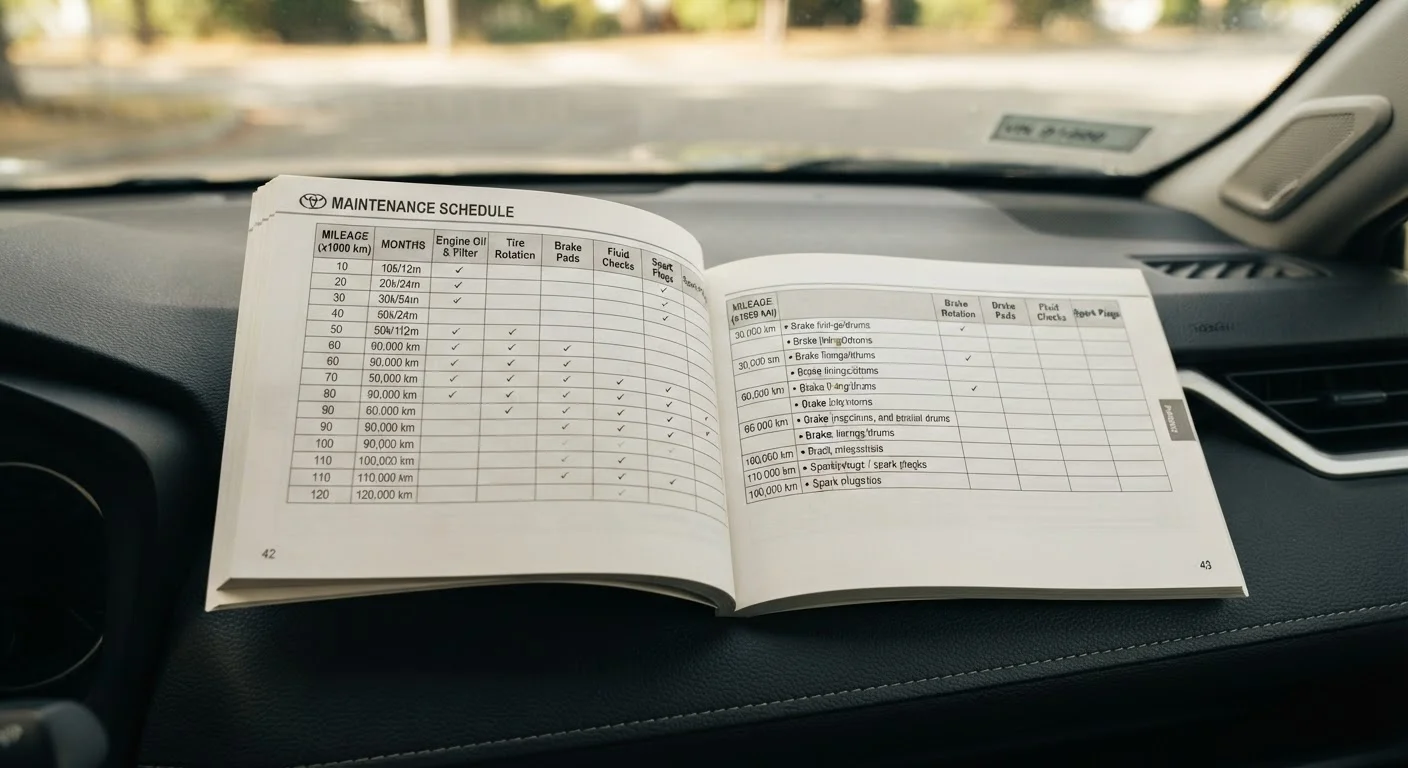
- Your owner's manual lists the manufacturer's recommended interval, which is the most reliable guide.
- Driving conditions like short trips, extreme temperatures, and towing can shorten the interval significantly.
- Many modern vehicles have an oil life monitoring system that calculates intervals based on actual driving.
- Using the wrong oil viscosity or grade can void warranty coverage and accelerate engine wear.
Why that 3,000-mile number stuck around
Decades ago, 3,000 miles was a reasonable rule of thumb. Engine tolerances were looser, oil refinement was less advanced, and the guidance made sense for vehicles of that era. Oil companies and quick-lube chains promoted the interval heavily, and it became cultural shorthand for responsible car ownership.
The vehicles in driveways today are fundamentally different. Tighter machining, lower-friction coatings, and far better oil chemistry have pushed manufacturer-recommended intervals well past 3,000 miles for virtually every new vehicle sold in the United States. Many automakers now specify 7,500 miles for conventional oil and 10,000 miles or more for synthetic. The 3,000-mile rule persists mainly because it is profitable to promote and because drivers have not been given a clear reason to question it.
Your owner's manual is where the accurate answer lives. If you want a broader map of everything your manual covers, our article on your car's maintenance schedule breaks down each service interval in plain terms.
How to read the interval listed in your manual
Most manuals list two sets of conditions: normal and severe. Normal means mostly highway miles, moderate temperatures, and trips long enough for the engine to reach full operating temperature. Severe covers short trips, extreme climates, towing, and heavy city traffic.
Many drivers assume they fall under normal use. In practice, a large share of daily driving, school runs, grocery trips, short commutes, fits the severe category because the engine never fully warms up. Cold starts are the hardest minutes in an engine's life, and frequent short trips mean the engine spends a disproportionate amount of time in that vulnerable state.
Severe driving conditions shorten your interval
Manufacturers define 'severe' use as frequent short trips under five miles, stop-and-go city driving, towing or hauling heavy loads, and operating in extreme heat or cold. If any of these describe your regular driving, use the shorter of the two intervals your manual typically lists. Ignoring this can lead to oil breakdown before your next scheduled change.
If your manual lists both a mileage and a time interval (for example, 7,500 miles or 12 months, whichever comes first), the time interval matters even for low-mileage drivers. Oil degrades through oxidation and moisture absorption over time, not just through use. A car driven only 2,000 miles in a year still needs fresh oil by the 12-month mark.
Unfamiliar with some of the terms in your manual? Our car care glossary defines common maintenance language in plain English.
Common myths about oil change intervals, corrected
Misinformation about oil changes is widespread because the topic has been shaped more by marketing than by engineering guidance. The myth-and-fact pairs below address the most common ones.
Myth
You need to change your oil every 3,000 miles, no matter what.
Fact
Most modern vehicles with conventional oil are rated for 5,000 to 7,500 miles between changes, and many synthetic-oil vehicles can go 10,000 miles or more.
The 3,000-mile figure comes from an era of older engine tolerances and oil formulations that have long since been replaced. The California Department of Resources Recycling and Recovery has publicly stated that most people change their oil far more often than necessary, which generates millions of gallons of waste oil each year. Today's refinery processes produce far more stable base oils, and modern engines are machined to tighter tolerances. Check your owner's manual for the manufacturer's stated interval. That number is what engineers tested your specific engine against, not a generic industry guess.
Myth
Dark oil means it has to come out immediately.
Fact
Motor oil darkens quickly because it is doing its job, picking up combustion byproducts and keeping them suspended so they do not settle on engine parts.
Color alone is not a reliable indicator of whether oil needs changing. A healthy engine will turn oil dark brown or black within a few hundred miles of a fresh change, especially with a diesel engine. What you should actually look for when you pull the dipstick: a gritty or grainy texture, a milky or foamy appearance (which can signal coolant contamination), or a level that keeps dropping between checks. Those signs matter more than color. See our guide to checking fluid levels at home for a plain-language walkthrough on reading your dipstick correctly.
Myth
All motor oil is essentially the same, so any grade will work.
Fact
Oil viscosity grades (such as 5W-30 or 0W-20) are matched to specific engine designs, and using the wrong grade can reduce fuel economy and accelerate wear.
Viscosity describes how well oil flows at different temperatures. A thinner oil (lower second number) flows faster and reaches tight clearances quickly on cold starts, while a thicker oil holds its protective film at high operating temperatures. Your manufacturer chose a specific grade for your engine's clearances and oil pump design. Using a heavier grade than specified does not add protection; it can actually starve parts of adequate lubrication on startup. The correct grade is printed on the oil cap, on the dipstick, and in your owner's manual. For more on how oil types differ, see our article on synthetic vs. conventional motor oil.
Myth
If your car has an oil life monitor, you can ignore the miles and just wait for the light.
Fact
Oil life monitors are useful tools, but they estimate degradation based on driving data and are not infallible. They still require you to understand what they are measuring.
An oil life monitoring system tracks variables like engine temperature cycles, rpm patterns, and trip length to estimate when oil has degraded to a threshold. It does not directly measure oil chemistry. If you have an unusual driving pattern, such as extended idling or frequent short cold-weather trips, the system may not catch every stress factor. The monitor is a helpful guide, not a guarantee. Reset it correctly after each oil change (your manual explains how) and always use the oil grade and type the system was calibrated for.
Myth
Switching from conventional to synthetic oil will cause leaks in an older engine.
Fact
Modern full-synthetic oil does not cause leaks in engines that are otherwise in good condition; it may reveal leaks that already existed by flowing through small gaps more easily.
This concern has roots in older synthetic formulations that were harder on certain rubber seals. Current API-rated synthetic oils meet the same seal-compatibility standards as conventional oils. If your older engine has worn or hardened seals, those seals may already be weeping slightly, and synthetic oil's lower viscosity at cold temperatures can make that seep more visible. The fix is to address the seals, not to avoid synthetic oil. Consult a qualified mechanic if you notice oil spots under an older vehicle after switching oil types.
For drivers thinking about tackling their own oil changes, our DIY car maintenance guide for beginners covers what you need to get started safely at home.
The content provided on our blog site traverses numerous categories, offering readers valuable and practical information. Readers can use the editorial team’s research and data to gain more insights into their topics of interest. However, they are requested not to treat the articles as conclusive. The website team cannot be held responsible for differences in data or inaccuracies found across other platforms. Please also note that the site might also miss out on various schemes and offers available that the readers may find more beneficial than the ones we cover.