
Car Care Terms Every Driver Should Recognise

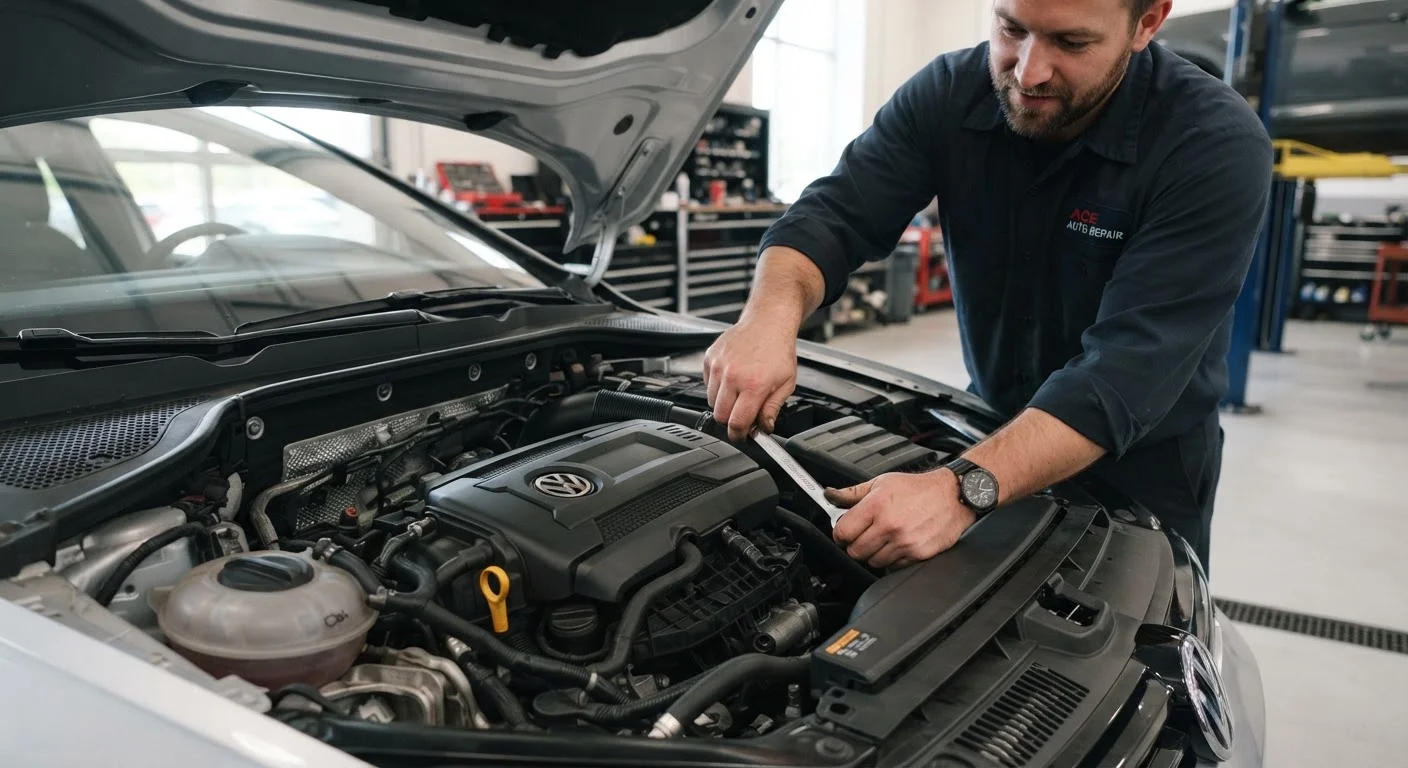
From torque specs to coolant flush: a quick-reference glossary of common automotive maintenance terms in plain, jargon-free language.
Why automotive vocabulary matters for your wallet
When a shop calls to say your vehicle needs a 'coolant flush' or that your 'CV axle' is failing, most drivers face a choice: agree and pay, or ask questions and risk feeling lost. Neither option feels good. Understanding the words mechanics use puts you in a much stronger position, whether you are comparing quotes, deciding what to tackle yourself, or simply knowing when a repair is urgent.
This reference covers the terms that come up most often in everyday maintenance and repair conversations. For a broader look at how service intervals work, see your car's maintenance schedule explained.
OBD-II code
A standardized diagnostic trouble code produced by your vehicle's onboard computer when it detects a problem. A code reader (available at most auto parts stores) retrieves these codes so you or a mechanic can identify what triggered the check-engine light.
Viscosity
A measure of how thick or thin a fluid is and how easily it flows at different temperatures. Engine oil viscosity is expressed as a number grade (such as 5W-30), where the first number indicates cold-weather flow and the second indicates high-temperature flow.
Torque
A rotational force, measured in foot-pounds or Newton-meters. In everyday maintenance, you'll hear it in two contexts: the power an engine produces, and the tightening force applied to bolts during a repair.
Deferred maintenance
Repairs or services that are overdue but have not yet been completed. Letting maintenance slide can turn a small, inexpensive fix into a larger and more costly one over time.
Coolant (antifreeze)
A liquid mixture, usually water and ethylene glycol, that circulates through the engine to regulate temperature. It prevents the engine from overheating in summer and freezing in winter.
Head gasket
A seal between the engine block and the cylinder head that keeps coolant, oil, and combustion gases in their separate passages. A failed head gasket is a serious repair that can allow coolant to mix with oil or enter the combustion chamber.
Serpentine belt
A single, continuous belt that drives multiple engine accessories, including the alternator, power steering pump, and air-conditioning compressor. Most manufacturers recommend inspecting it regularly for cracks or fraying.
Idle
The condition when an engine runs at its base RPM with the vehicle stationary and no load on the drivetrain. A rough or unusually high idle can indicate sensor problems, vacuum leaks, or other issues worth diagnosing.
Engine and drivetrain terms
The engine and drivetrain generate and deliver power to your wheels. Repairs in this area tend to be the most expensive, so knowing the language helps you ask the right questions before approving work.
- Torque spec: a specific tightening value (measured in foot-pounds or Newton-meters) that a manufacturer requires for a bolt or fastener. Mechanics use a torque wrench to hit this number precisely. Over- or under-tightening can cause leaks or breakage.
- Compression test: a diagnostic check where a technician measures air pressure inside each engine cylinder. Low compression in one or more cylinders can mean worn piston rings, a failing head gasket, or a damaged valve.
- CV axle (constant velocity axle): the shaft that transfers engine power to the front wheels on most front-wheel-drive vehicles. A worn CV axle often makes a clicking sound during turns.
- Timing belt / timing chain: a belt or chain that synchronizes the crankshaft and camshaft so the engine's valves open and close at the right moment. Belts are rubber and must be replaced on a schedule; chains are metal and typically last the life of the engine but still require attention if they stretch.
Fluids and filters
Fluid and filter maintenance is where most drivers can save real money by doing simple checks at home. Checking your car's fluid levels does not require a mechanic or special tools.
- Coolant flush: a service that drains old coolant (also called antifreeze) from the cooling system, flushes out deposits, and refills with fresh fluid. Coolant degrades over time and loses its ability to prevent both freezing and overheating.
- Transmission fluid: the oil that lubricates and cools an automatic or manual transmission. Some manufacturers label it 'lifetime fill,' but many technicians recommend periodic inspection; always check your owner's manual.
- Cabin air filter: the filter that cleans air flowing through your vehicle's heating and air-conditioning system. It is one of the easiest filters to replace yourself and typically costs a fraction of what a shop charges for the same job.
- Fuel filter: screens debris from gasoline before it reaches the injectors. On older vehicles it is an external component drivers can sometimes replace themselves; on many newer models it is inside the fuel tank and requires a professional.
| Cabin air filter replacement interval | Every 12,000 to 15,000 miles (check owner's manual) (Typical manufacturer guidance; varies by vehicle and driving conditions) |
| Minimum legal tire tread depth (most U.S. states) | 2/32 inch |
| Common engine oil viscosity grades | 0W-20, 5W-30, 10W-40 (Always use the grade specified in your owner's manual) |
| OBD-II standard adopted in the U.S. | Required on all passenger vehicles sold after 1996 (U.S. Environmental Protection Agency requirement) |
| Brake pad replacement threshold | Typically at or below 2 to 3 mm of remaining pad material (Varies by pad type and manufacturer specification) |
Brakes, tires, and suspension
These systems affect safety directly. If a shop mentions any of the following terms, treat the conversation as a priority.
- Brake rotor: the flat metal disc that brake pads clamp against to slow the vehicle. Rotors wear down over time and can warp from heat. A pulsing or vibrating brake pedal is a common sign of rotor problems.
- Brake caliper: the hydraulic clamp that squeezes the brake pads against the rotor. A seized caliper can cause uneven braking or a vehicle that pulls to one side.
- Tread depth: the measurement of remaining rubber on a tire, expressed in 32nds of an inch. The legal minimum in most U.S. states is 2/32 inch, but handling and wet-weather braking improve noticeably above 4/32 inch.
- Wheel alignment: an adjustment of the angles at which your tires contact the road. Poor alignment causes uneven tire wear and can make a vehicle pull left or right while driving.
- Strut / shock absorber: components that dampen the movement of your suspension so the vehicle does not bounce excessively over bumps. Worn struts increase stopping distances and reduce handling precision.
Seasonal car care checks include tire inspections that can catch tread and pressure problems before they become safety issues. If you are new to doing any of this work yourself, DIY car maintenance for beginners outlines which tasks are genuinely safe to handle at home.
The content provided on our blog site traverses numerous categories, offering readers valuable and practical information. Readers can use the editorial team’s research and data to gain more insights into their topics of interest. However, they are requested not to treat the articles as conclusive. The website team cannot be held responsible for differences in data or inaccuracies found across other platforms. Please also note that the site might also miss out on various schemes and offers available that the readers may find more beneficial than the ones we cover.