
Stocking Up Versus Shopping Weekly: A Cost and Convenience Trade-Off

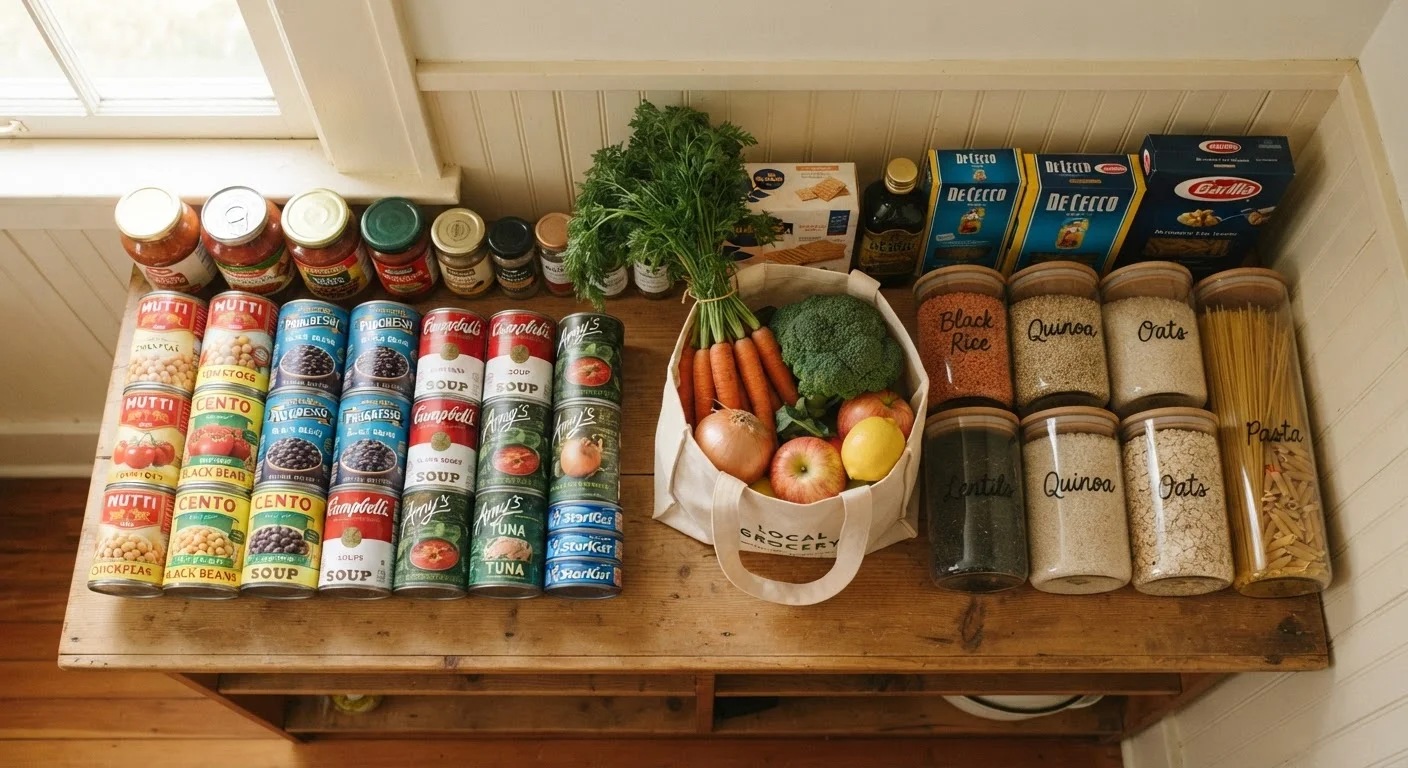
Pantry-loading saves money in theory, but storage costs and spoilage complicate the picture. Here is how to weigh both approaches honestly.
Option A
Stocking up
The bulk-buying, pantry-building approach.
Best for: Households with storage space, predictable consumption patterns, and the cash flow to buy ahead.
Option B
Shopping weekly
The just-in-time, fresh-focused approach.
Best for: Smaller households, renters with limited storage, or anyone managing a tight per-week cash budget.
Key takeaways
- Stocking up lowers per-unit cost but requires upfront cash and adequate storage.
- Weekly shopping reduces waste and spoilage but can cost more per unit over time.
- Household size and storage capacity are the two biggest factors in choosing an approach.
- A hybrid strategy often produces better savings than committing to either extreme.
- Spoilage and impulse buying can erase the savings from bulk purchasing if left unchecked.
The core trade-off
The appeal of stocking up is straightforward: buying in larger quantities usually lowers the cost per unit. A 10-pound bag of rice costs less per pound than a 2-pound bag at most stores. For shelf-stable goods with long expiration windows, that math holds up reliably. The catch is that you pay more upfront, you need somewhere to put everything, and the savings evaporate if any of it goes unused.
Weekly shopping, by contrast, keeps purchases tied to actual need. You buy what you will eat in the next several days, which limits waste. The per-unit cost tends to be higher, but you are not tying up $80 worth of pantry goods that your family may or may not get through before next spring.
Neither method is universally superior. The right answer depends on specific household conditions, and most families benefit from applying each approach to different product categories rather than committing wholesale to one. See why bigger packages are not always cheaper for a closer look at when bulk sizing stops delivering value.
| Criterion | Stocking up | Shopping weekly |
|---|---|---|
| Per-unit cost | Generally lower | Generally higher |
| Upfront cash required | Higher | Lower |
| Spoilage risk | Higher if poorly planned | Lower |
| Storage space needed | Significant | Minimal |
| Impulse buying risk | Higher in bulk stores | Lower with a list |
| Best product fit | Shelf-stable staples | Perishables, fresh items |
| Shopping frequency | Less frequent | Once a week or more |
Where stocking up actually saves money
Stocking up works best on shelf-stable items with long use windows: dried beans, canned tomatoes, pasta, cooking oil, paper products, and cleaning supplies. These categories share two traits: they will not spoil before you use them, and per-unit prices drop meaningfully as package size increases.
The savings are clearest when you time larger purchases around genuine price drops rather than buying in bulk at regular price. Paying $1.20 per unit for 24 of something is not a deal if you could buy 4 at $0.90 per unit when it goes on sale. Unit price math is the tool that separates a real bulk deal from a packaging illusion.
Storage cost is a real variable that many households overlook. If stocking up requires renting a storage unit, buying additional shelving, or running a dedicated chest freezer, those expenses belong in your calculation. A chest freezer running year-round can add $50 to $100 or more to annual utility costs depending on your electricity rate and the unit's efficiency.
Where weekly shopping holds the advantage
Weekly shopping is better suited to fresh produce, dairy, proteins, and any item your household consumes irregularly. Buying a large quantity of something perishable to save 15 cents per unit makes no economic sense if half goes in the trash.
There is also a behavioral argument for weekly shopping. Smaller, more deliberate trips with a specific list tend to produce less impulse buying. A once-a-week shop with a written list is a natural friction point against the end-cap purchases and oversized quantities that quietly inflate grocery bills. Shopping habits that quietly inflate the family budget covers how those patterns compound across a year.
For households managing a week-to-week cash budget, the liquidity argument matters too. Spending $25 across a few trips is easier to absorb than $120 at a warehouse club, even if the per-unit math favors the club. Why the grocery budget is the first place families overspend explores how cash-flow mismatches contribute to overspending.
A practical hybrid approach
Most households are better served by splitting their purchasing by product type. Stock up on shelf-stable, high-turnover staples you use consistently. Shop weekly for perishables, fresh ingredients, and anything with an unpredictable use pattern.
A workable starting point: audit your pantry to identify which 10 to 15 items your household uses reliably every month. Those are strong candidates for bulk or advance purchasing. Everything else is better bought as needed. This approach captures the per-unit savings where they are real while avoiding the waste and cash-flow strain that come from over-stocking the wrong categories.
If you want to apply this logic further across food spending, a cost-and-health breakdown of whole foods versus processed alternatives adds another useful lens for household grocery decisions.
The content provided on our blog site traverses numerous categories, offering readers valuable and practical information. Readers can use the editorial team’s research and data to gain more insights into their topics of interest. However, they are requested not to treat the articles as conclusive. The website team cannot be held responsible for differences in data or inaccuracies found across other platforms. Please also note that the site might also miss out on various schemes and offers available that the readers may find more beneficial than the ones we cover.