
Unit Price Math: The Grocery Shelf Skill Most Shoppers Skip

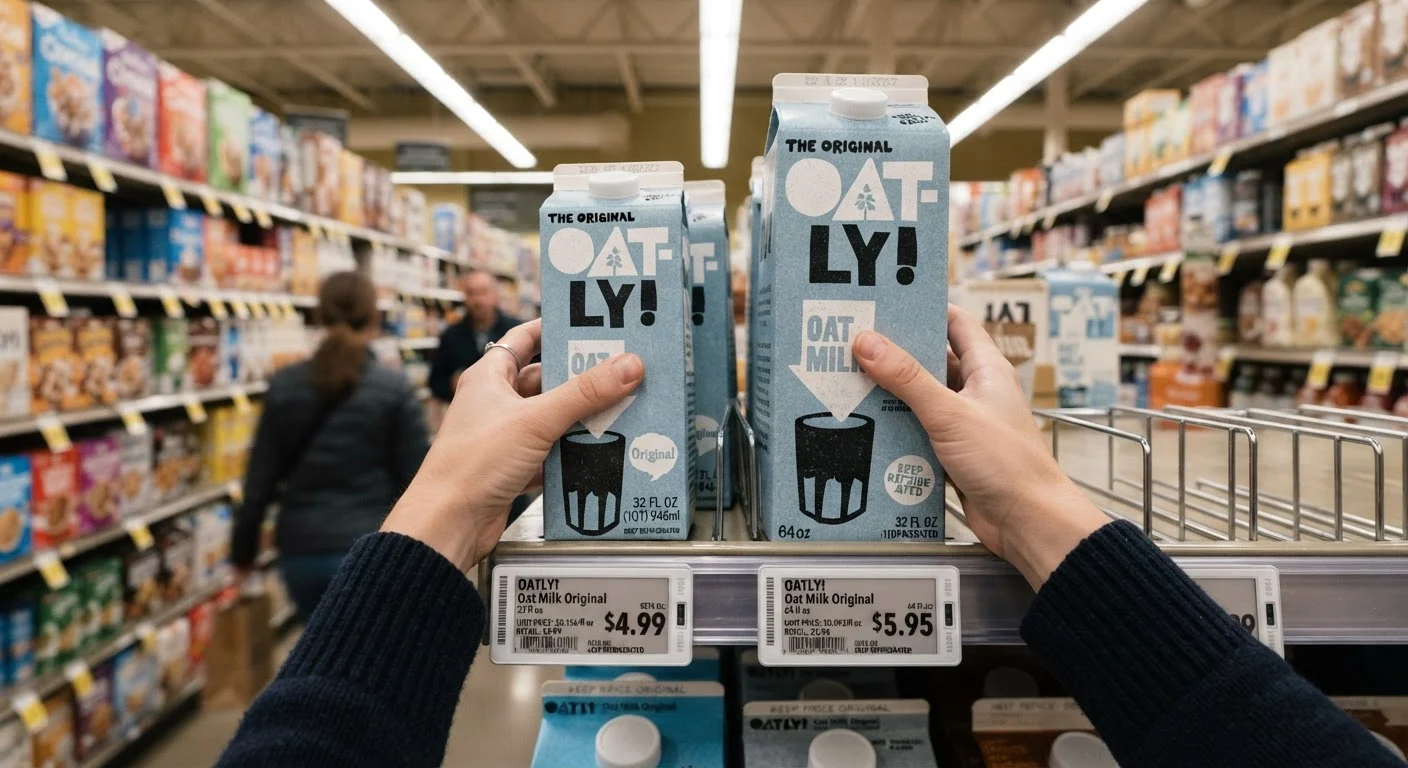
Learn how to read unit prices on store shelves to compare products accurately and avoid paying more than you need to.
Key takeaways
- The unit price on a shelf label lets you compare any two products on equal footing, regardless of package size.
- Larger packages do not always have a lower unit price; this must be verified each time.
- Store brands and name brands often carry different unit prices that the shelf label makes easy to spot.
- Sales can temporarily change which option has the lowest unit price, so re-checking during a promotion matters.
- You can calculate a unit price yourself by dividing the shelf price by the package's total quantity.
What the shelf label is actually telling you
Every grocery shelf tag contains two prices. The large number is what you pay at the register. The smaller number, typically tucked into a corner, is the unit price. That second figure is what makes comparison possible.
Unit prices standardize cost across different package sizes. A 16 oz jar priced at $3.84 works out to $0.24 per ounce. A 24 oz jar priced at $5.28 works out to $0.22 per ounce. Without the per-ounce figure, the $1.44 price difference between the jars tells you nothing useful. With it, the decision takes about three seconds.
The measurement used depends on product type. Dry goods typically show price per ounce or per pound. Liquids may show price per fluid ounce. Paper products often show price per sheet or per count. Produce is usually priced per pound. The unit stays consistent across competing products in the same category, which is what makes the comparison valid.
Use your phone's calculator in the aisle
If a shelf label is missing or the unit shown is unfamiliar, divide the package price by total quantity printed on the label. This takes under a minute and gives you the same number the store would print. No app needed, just the default calculator already on your phone.
How to read and calculate unit prices yourself
When the shelf label is missing, damaged, or uses a unit you do not recognize, the math is straightforward. Divide the shelf price by the total quantity on the package.
For example: a 32-count box priced at $7.68 gives $7.68 / 32 = $0.24 per count. A 50-count box priced at $10.50 gives $10.50 / 50 = $0.21 per count. The larger box costs less per unit, but the math is what confirms it rather than the size of the box.
Most smartphones have a built-in calculator. Running this division in the aisle takes under a minute and removes any guesswork. Grocery store apps sometimes display unit prices in search results, which can be useful when comparing items not shelved side by side.
One situation that trips up many shoppers: comparing products sold in different units. A price per fluid ounce (volume) and a price per ounce (weight) are not directly comparable for most products. Stick to the same unit type, or check whether the store shelf consistently labels competing products with the same measurement before drawing conclusions.
When unit prices can mislead
Unit prices simplify comparison but do not capture everything relevant to a purchase. A few situations call for extra attention.
Sales and coupons shift the numbers. The printed unit price reflects the regular shelf price. If a small package is on promotion this week, its effective unit price may be lower than the large package's standard unit price. Recalculate using the sale price when a discount applies.
Perishables introduce a waste factor. A gallon of milk has a lower unit price than a half-gallon, but if half the gallon goes down the drain before use, the actual cost per ounce consumed rises. Unit price is most reliable for shelf-stable goods that will definitely be used. For households buying perishables, weighing buy size against realistic consumption is a separate but related calculation.
Shelf label errors occur. Mismatched or incorrect unit prices appear more often than many shoppers expect. If the math on a label looks off, verify it with a quick phone calculation before assuming the label is right.
Understanding how retailers construct their pricing also helps. Common pricing tactics like anchor pricing can make a product look like a bargain before you check the unit figure.
Putting unit price checks into a regular shopping habit
Using unit prices consistently means building it into how you move through the store rather than treating it as an occasional exercise.
A practical approach: when you reach for any product, glance at the unit price on its shelf tag and at least one neighboring option before placing it in the cart. This takes no extra time after a few trips because the habit becomes automatic.
Grocery overspending rarely happens in one dramatic purchase. It accumulates across dozens of small choices where shoppers pay more than they need to without realizing it. Small recurring overpayments at the grocery store add up faster than most households track.
For a broader view of how retail environments are designed to prompt spending, shopping habits that quietly inflate household costs covers the patterns worth recognizing. And before any significant purchase, a quick pre-purchase review can confirm you are not missing a better option in the same aisle.
Frequently Asked Questions
The content provided on our blog site traverses numerous categories, offering readers valuable and practical information. Readers can use the editorial team’s research and data to gain more insights into their topics of interest. However, they are requested not to treat the articles as conclusive. The website team cannot be held responsible for differences in data or inaccuracies found across other platforms. Please also note that the site might also miss out on various schemes and offers available that the readers may find more beneficial than the ones we cover.