
Whole Foods vs. Processed Convenience Foods: A Cost-and-Health Breakdown

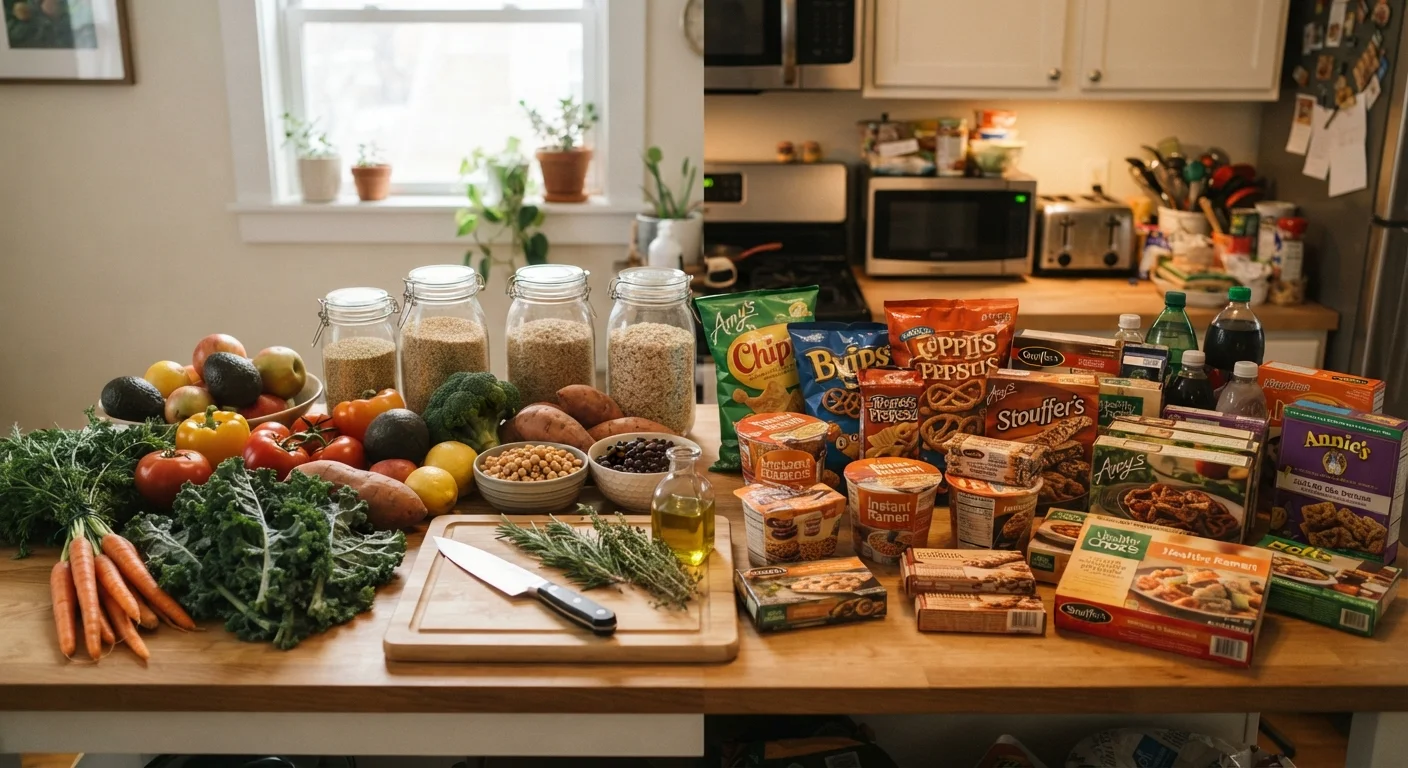
A side-by-side look at whole foods and processed alternatives, weighing real cost differences against nutritional trade-offs for everyday families.
Option A
Whole Foods
The less-processed, nutrient-dense baseline.
Best for: Families willing to invest a bit more prep time in exchange for better nutritional value and long-term health benefits.
Option B
Processed Convenience Foods
The fast, shelf-stable, budget-friendly alternative.
Best for: Busy households that prioritize speed, low upfront cost, and minimal preparation time for weeknight meals and snacks.
Key takeaways
- Whole foods often cost less per serving than their processed equivalents when purchased as staples like oats, beans, or cabbage.
- Processed convenience foods carry higher sodium, added sugar, and refined carbohydrate levels on average, per USDA dietary data.
- Time is the real hidden cost of whole-food cooking, and realistic planning is needed to make it sustainable for busy families.
- A mixed strategy, anchoring meals in whole-food staples while using select convenience items, can balance budget, nutrition, and time.
What each category actually means
The term "whole foods" refers to items eaten close to their natural state: fresh or frozen vegetables, fruits, whole grains like oats and brown rice, legumes, eggs, and plain cuts of meat or fish. Minimal processing, such as freezing or rolling oats, does not disqualify a food from this category.
"Processed convenience foods" covers a wide range. Canned soups, boxed mac and cheese, frozen burritos, packaged crackers, and shelf-stable meal kits all fall here. The USDA and nutrition researchers often use the NOVA classification to distinguish lightly processed foods (canned tomatoes) from ultra-processed ones (flavored chips, instant noodles), which typically contain additives, emulsifiers, and flavor compounds not found in home kitchens.
For this comparison, "processed convenience foods" means products in the ultra-processed range, since those dominate grocery convenience aisles and family snack budgets. For more on the evidence behind food costs and eating patterns, see what nutrition science says about affordable eating.
This article is for general informational purposes only and is not medical or dietary advice. Consult a registered dietitian or qualified healthcare provider for guidance specific to your family's health needs.
The real cost comparison
Processed convenience foods appear cheap at the register, and often are on a per-package basis. A box of flavored ramen costs under a dollar. A bag of chips runs two to three dollars. The deception is in serving size and satiation: ultra-processed foods tend to be calorie-dense but low in protein and fiber, so portions disappear faster.
Compare staple whole foods by cost per serving: dried lentils average around $1.50 per pound and yield roughly ten half-cup cooked servings. A dozen eggs typically costs $2 to $4 depending on location and type. Rolled oats run about $0.15 to $0.25 per cooked serving. These numbers shift by region and season, but the general pattern holds: whole-food staples are competitive or cheaper when measured per gram of protein or fiber delivered.
Where whole foods can get expensive is in fresh produce, specialty items, and any pre-washed or pre-cut convenience formats. Buying a bag of pre-cut stir-fry vegetables costs two to three times more than buying the same vegetables whole. That gap is worth knowing because it is avoidable.
| Criterion | Whole Foods | Processed Convenience Foods |
|---|---|---|
| Typical cost per serving (staples) | $0.15 to $0.50 | $0.50 to $2.00+ |
| Sodium content | Low (naturally occurring) | Often high (added salt) |
| Added sugar | None in most whole foods | Frequently present |
| Dietary fiber per serving | Generally higher | Generally lower |
| Prep time required | Moderate to high | Minimal |
| Shelf life | Short (fresh) to long (dried/frozen) | Long (months to years) |
| Ingredient transparency | High (single-ingredient or close) | Variable, often complex |
For a closer look at how shopping frequency affects these numbers, stocking up versus shopping weekly is worth reading.
Nutritional trade-offs
Ultra-processed foods account for a large share of daily sodium, added sugar, and saturated fat intake for most American households, according to research published in peer-reviewed nutrition journals. The mechanisms are not mysterious: manufacturers add salt, sugar, and fat because they extend shelf life and improve palatability, which drives repeat purchase.
Whole foods, eaten in recognizable form, generally supply more dietary fiber, vitamins, and minerals per calorie. Fiber in particular is relevant to families: the USDA Dietary Guidelines note that most Americans consume well below the recommended daily fiber intake, and whole grains, legumes, and vegetables are the main sources.
57%
Share of US calories from ultra-processed foods
A study published in BMJ Open using NHANES data estimated that ultra-processed foods account for roughly 57% of total daily calorie intake among American adults.
~8g
Average daily fiber intake vs. 25-38g recommendation
The USDA Dietary Guidelines consistently note that most Americans fall well short of recommended daily fiber intake, with whole grains and legumes as the primary gap-fillers.
70%+
Of US sodium intake from processed and restaurant foods
The CDC attributes more than 70% of Americans' daily sodium intake to sodium added during food processing and preparation outside the home.
That said, not all processed foods are nutritionally equivalent. Plain canned beans, frozen plain vegetables, and minimally processed whole-grain bread sit closer to whole foods in nutritional terms than flavored snack products do. Label reading matters: ingredients listed first appear in the greatest quantity, so a product where "sugar" or "sodium" appears in the first three ingredients warrants more scrutiny.
Families who want to understand why convenience snacks are designed to be hard to resist can get useful context from why processed snacks keep winning at the grocery store.
Time, effort, and practical strategy
The honest barrier to whole-food cooking is time, not cost. Dried beans require soaking. Whole grains take longer to cook than instant varieties. Vegetables need washing and cutting. For a two-income household with children, that time pressure is real.
A practical middle path is to anchor the diet in a handful of whole-food staples that cook in bulk with little hands-on effort: a slow cooker pot of beans, a sheet pan of roasted root vegetables, a large batch of brown rice. These can cover multiple meals across a week. Convenience foods then fill genuine gaps rather than replacing whole-food meals by default.
Common myths about the cost of healthy eating also shape how families approach the grocery store, and addressing those misconceptions can open up more practical options. For broader strategies on managing family food spending alongside other household costs, family finance basics is a useful starting point.
The content provided on our blog site traverses numerous categories, offering readers valuable and practical information. Readers can use the editorial team’s research and data to gain more insights into their topics of interest. However, they are requested not to treat the articles as conclusive. The website team cannot be held responsible for differences in data or inaccuracies found across other platforms. Please also note that the site might also miss out on various schemes and offers available that the readers may find more beneficial than the ones we cover.