
Why Bigger Packages Are Not Always Cheaper

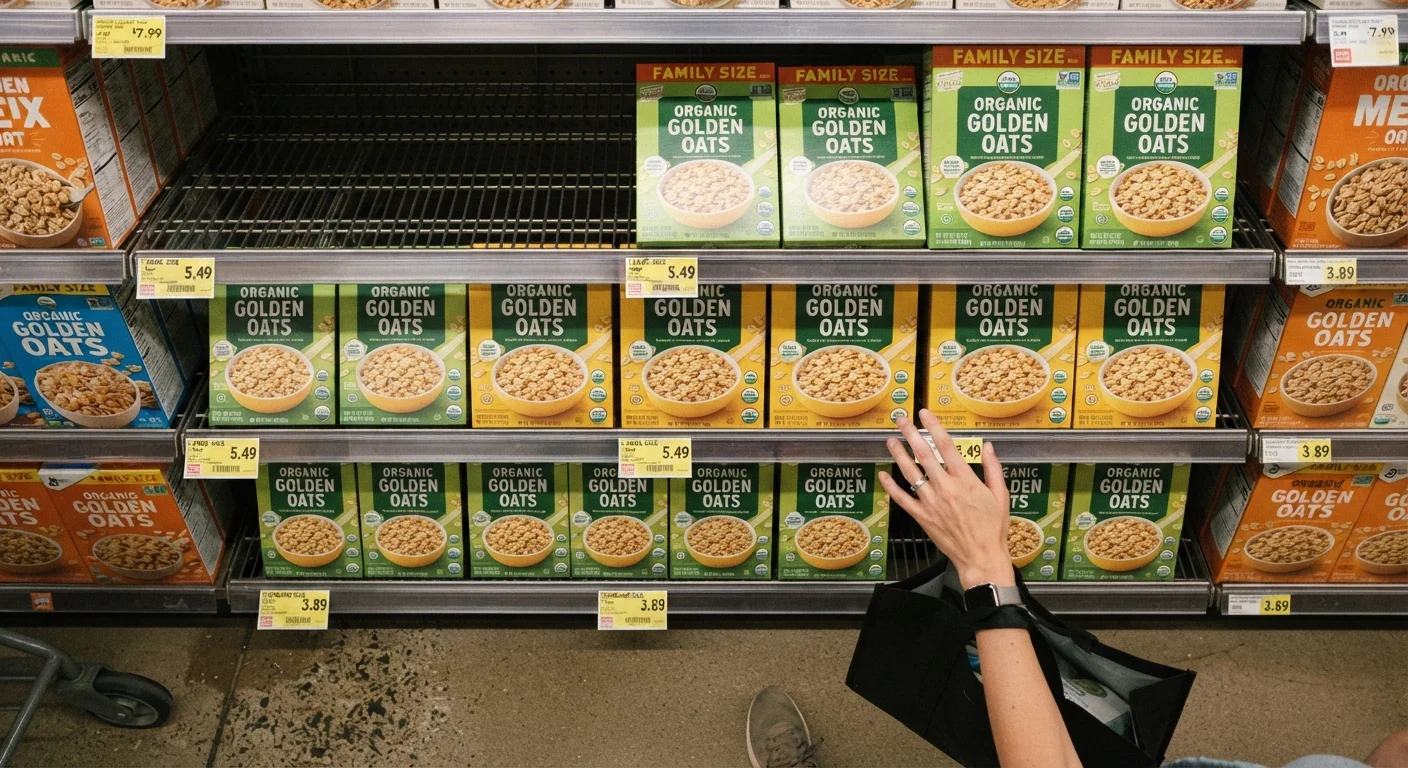
Bulk sizing feels like a deal, but unit price math often tells a different story. Here is when buying more actually costs more per ounce.
Key takeaways
- The unit price, not the shelf price, determines whether a larger package is actually cheaper.
- Retailers sometimes price mid-size packages at a lower cost per ounce than the jumbo size.
- Spoilage and storage can erase any savings from buying in bulk for perishable goods.
- Store loyalty programs and sale cycles can make smaller packages the better deal on certain weeks.
- Comparing unit prices across all available sizes takes less than a minute and can change the math significantly.
The assumption built into bulk buying
Most shoppers treat package size as a proxy for value. The bigger the container, the lower the price per unit, right? That assumption drives enormous quantities of oversized pasta, laundry detergent, and shampoo into home pantries every week. The problem is the assumption is often wrong, and the error costs families real money over time.
Unit price is the only number that matters when comparing package sizes. It tells you how much you pay per ounce, per count, or per sheet, regardless of what the total shelf price says. Without it, a $12 jumbo bottle can look like a bargain next to a $7 regular bottle, when the per-ounce cost is actually higher on the larger one. Learning to read that figure is the foundational skill covered in unit price math, and it applies directly here.
Retailers are not required to price larger packages more efficiently. Pricing decisions reflect supplier contracts, shelf-space economics, and demand patterns, none of which guarantee that the biggest option is the most economical one.
Common myths and the facts behind them
Several persistent beliefs keep shoppers reaching for the oversized option even when the numbers do not support it. The myth-and-fact pairs below address the most common ones.
Myth
The largest package always has the lowest cost per unit.
Fact
Retailers sometimes price mid-size or even smaller packages at a lower cost per ounce than the jumbo option.
Price-per-unit calculations do not automatically favor the largest size. Warehouse clubs and grocery chains set prices based on margin targets and supplier agreements, not a universal rule that rewards size. Checking the unit price label on every size in the same product row frequently reveals that the largest option is not the most economical. When no unit price label is present, dividing the shelf price by the total weight or count gives the same figure.
Myth
Buying in bulk always saves money for a family.
Fact
Savings from bulk buying disappear when products expire, spoil, or go unused before the household can consume them.
For perishables, the effective cost per unit consumed depends on how much actually gets used. A bulk package of strawberries may cost less per pound, but if a third of the package spoils, the real cost per pound eaten rises above what a smaller package would have cost. The same applies to products with expiration dates, including medications, condiments, and some cleaning supplies. Realistic consumption rate matters as much as unit price.
Myth
Store-brand bulk packs are always a better value than name-brand regular sizes.
Fact
Sale prices on name-brand regular sizes sometimes undercut store-brand bulk unit prices, depending on the week and the store.
Grocery stores run promotional cycles that temporarily drop the unit price of a regular-size name-brand product below the everyday unit price of the bulk or store-brand equivalent. Without tracking unit prices across a few shopping cycles, it is easy to miss these windows. Loyalty program discounts can widen that gap further. The practical approach is to check the unit price at each visit rather than assuming a fixed hierarchy.
Myth
Buying a large multi-pack of a new product is a good way to save money.
Fact
Buying in bulk before you know whether your household will use the product consistently adds waste risk, not savings.
A bulk purchase that sits unused or gets discarded is not a discount: it is a loss. Consumer research consistently finds that households overestimate their future consumption of unfamiliar products. A reasonable approach is to purchase the smallest available size of any new product first, confirm that the household will actually use it at a rate that justifies bulk buying, and then scale up on subsequent trips if the unit price math supports it.
Myth
Warehouse club memberships always pay for themselves through bulk savings.
Fact
Whether a membership pays for itself depends on which specific products you buy there and how reliably you compare unit prices elsewhere.
Warehouse clubs offer genuine unit-price advantages on a range of staples, but not on every category. Some items, particularly electronics, specialty foods, and seasonal goods, carry unit prices comparable to or higher than those at conventional retailers during sales. The membership fee is a fixed cost that must be recovered through actual savings on purchases made. Households that buy a narrow range of products there, or who do not verify unit prices against alternatives, may not recover the fee.
When bulk buying does make sense
Bulk sizing is genuinely cost-effective under specific conditions. Non-perishable goods with a long shelf life, products your household uses at a predictable rate, and items that store easily without requiring additional containers are reasonable candidates. Paper products, canned goods, and dry legumes tend to fit this profile.
The calculation gets more complicated with perishables. If a family-size bag of spinach costs less per ounce but half of it spoils before use, the effective cost per ounce consumed is higher than the label suggested. Stocking up versus shopping weekly examines that trade-off in practical terms, including how storage capacity and household consumption patterns affect which approach actually saves money.
Before any large purchase, running a quick pre-purchase audit helps confirm you are not paying a premium disguised as a discount. That process is outlined in a pre-purchase checklist worth bookmarking for regular grocery runs.
How this fits into broader shopping habits
The bulk-equals-cheaper myth is one of several assumptions that quietly inflate what families spend month to month. Impulse purchases near checkout, subscription renewals on unused services, and end-cap displays that highlight a sale price without showing the unit comparison all work the same way: they redirect attention from the number that actually matters. Shopping habits that inflate the family budget covers those patterns together.
The same logic applies outside the grocery store. Bulk booking assumptions surface in travel too, where paying upfront for a larger package of services can end up costing more per experience than booking selectively. Hidden costs in family vacation budgets shows how that plays out in resort fees, parking, and bundled packages that look like deals.
The corrective habit is straightforward: calculate the unit price for every size available, account for realistic usage before expiration or loss, and ignore the shelf price until that math is done.
The content provided on our blog site traverses numerous categories, offering readers valuable and practical information. Readers can use the editorial team’s research and data to gain more insights into their topics of interest. However, they are requested not to treat the articles as conclusive. The website team cannot be held responsible for differences in data or inaccuracies found across other platforms. Please also note that the site might also miss out on various schemes and offers available that the readers may find more beneficial than the ones we cover.