
Weekend Repairs That Actually Hold Up Over Time

Learn which common household repairs you can tackle yourself and what separates a lasting fix from a temporary patch.
Key takeaways
- Proper surface preparation matters more than the product you use for most common repairs.
- Matching the repair material to the substrate prevents premature failure and repeat work.
- Skipping steps to save time usually adds cost and labor within a year or two.
- Some repairs require permits or licensed tradespeople regardless of DIY skill level.
- Small, well-executed fixes compound into real savings when done correctly the first time.
Why some repairs fail and others last decades
Most weekend repairs fail not because the homeowner lacked skill but because the preparation was skipped. Paint peels when applied over a dirty or glossy surface. Caulk separates within months when the gap was not cleaned and dried first. Wood filler cracks when applied too thick in a single pass. In each case, the fix looked finished but was not built to last.
Understanding this pattern changes how you approach a repair. The visible step, applying the patch or coating, is usually the shortest part of the job. The cleaning, sanding, priming, and drying time that precedes it is where durability is actually decided. Deferred maintenance compounds quickly, so a repair that fails in six months costs more in total than one done correctly the first time.
Best practices for repairs that hold
The following practices apply across the most common household repair categories: drywall, wood trim, caulking, minor plumbing fixtures, and painted surfaces.
Clean and dry the repair surface completely before applying any filler, caulk, or coating.
Adhesion depends on surface condition. Dust, grease, loose paint, or residual moisture all prevent proper bonding, and the repair will separate or peel regardless of product quality. This step adds time but eliminates the most common cause of premature failure.
Match the repair product to the specific substrate and exposure conditions.
Wood, drywall, concrete, and tile each respond differently to fillers and coatings. A product suited for one material often fails on another. Exposure to moisture, UV, or temperature cycles narrows the field further.
Apply thin coats and allow full cure time between layers.
Thick single applications of spackle, joint compound, or caulk trap moisture inside and shrink as they dry, producing cracks or voids. Thin coats dry uniformly and bond to each preceding layer.
Feather edges so the repair blends into the surrounding surface.
A raised or abrupt patch edge is visible under paint or finish and telegraphs the repair. Feathering distributes the filler gradually, producing a flush surface that takes paint evenly.
Prime bare surfaces before applying finish paint or coating.
Bare drywall, raw wood, and patched areas absorb paint unevenly, leading to dull spots, poor coverage, and faster wear. Primer seals the surface and gives the finish coat a uniform base to adhere to.
For jobs that involve electrical panels, gas lines, structural framing, or load-bearing elements, these principles do not apply. Those tasks require licensed professionals and, in most jurisdictions, permits and inspections. If you are unsure whether a job crosses that line, assess the scope honestly before starting.
Common mistakes that turn a repair into a recurring cost
Using interior caulk in wet areas like tub surrounds or exterior windows is one of the most common errors. Interior caulk is not formulated to withstand sustained moisture or temperature swings, so it softens, gaps, and allows water intrusion within a season or two. Proper caulking technique and material selection prevent this entirely.
Applying joint compound or spackle directly over a soft or water-damaged area without stabilizing the substrate first produces another repeat job. The patch will crack or sink as the underlying material continues to move or deteriorate. Firm up or replace the damaged backing before you fill the surface.
On painted surfaces, skipping primer on bare wood or fresh drywall causes uneven absorption, visible color variation, and faster wear. One coat of the right primer costs less than the extra finish coats needed to compensate. Use a seasonal checklist to catch these situations before they grow.
Test your color match before committing
Before touching up painted walls, dab a small amount of stored paint on an inconspicuous spot and let it dry fully. Paint can shift in color as it ages on the wall, so what looked like a match when wet may stand out once dry. If the stored paint no longer matches, bring a paint chip to a hardware store for a custom tint rather than applying paint that will look patched.
Building a small repair kit that covers 80% of jobs
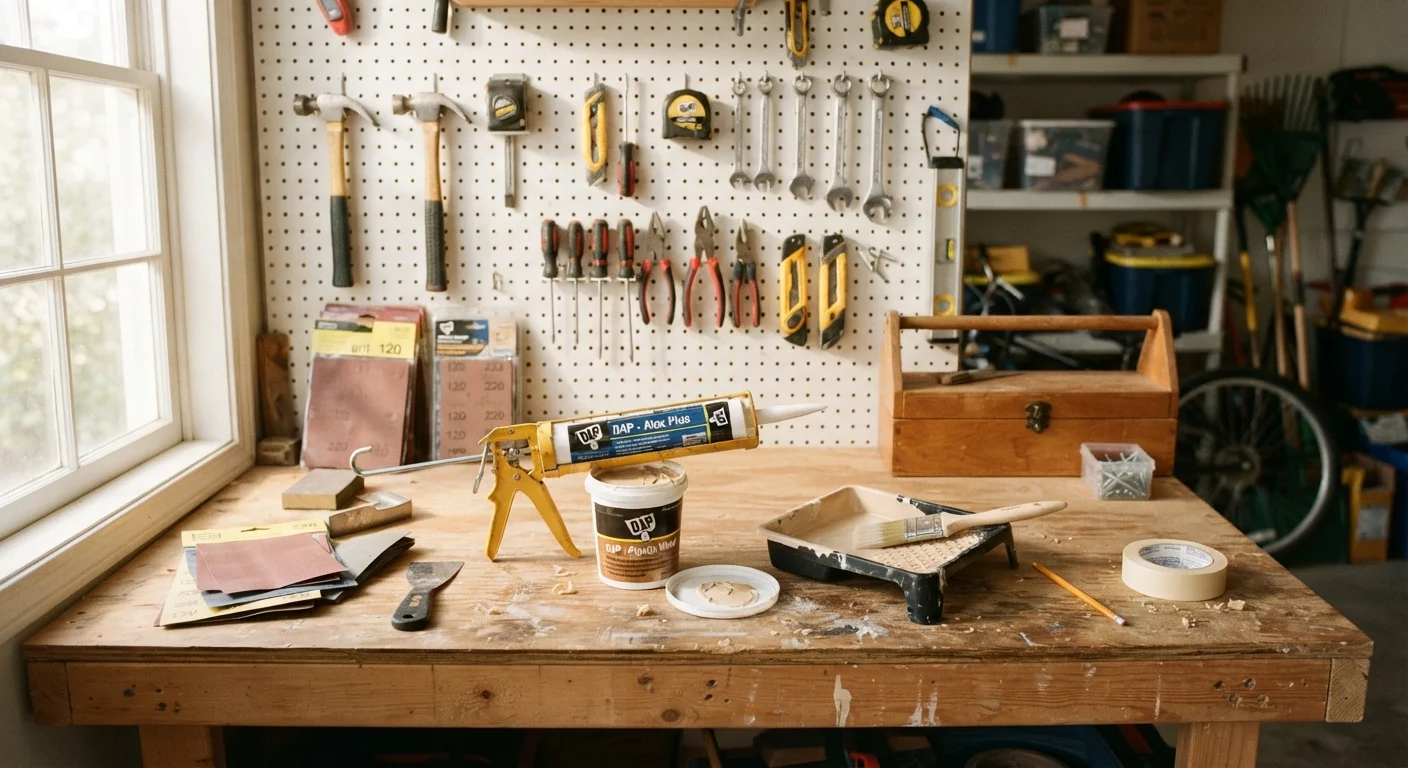
Most households can handle the majority of routine repairs with a modest set of materials kept on hand. A tube of paintable latex caulk, a tube of silicone caulk for wet areas, a small container of lightweight spackle, a putty knife, 120-grit and 220-grit sandpaper, a foam brush, and a pint of matching wall paint cover the repairs that come up most often.
Keeping these materials stocked means small problems get fixed the same weekend they appear rather than waiting until a supply run feels worth making. That timing matters: a hairline crack in caulk along a window sill is a ten-minute fix today and a potential moisture problem if left until next spring. Pairing this habit with a home repair fund gives you both the materials and the budget to respond quickly when a repair exceeds the basic kit.
The content provided on our blog site traverses numerous categories, offering readers valuable and practical information. Readers can use the editorial team’s research and data to gain more insights into their topics of interest. However, they are requested not to treat the articles as conclusive. The website team cannot be held responsible for differences in data or inaccuracies found across other platforms. Please also note that the site might also miss out on various schemes and offers available that the readers may find more beneficial than the ones we cover.