
DIY Versus Hiring a Pro: Matching the Job to Your Skill Level

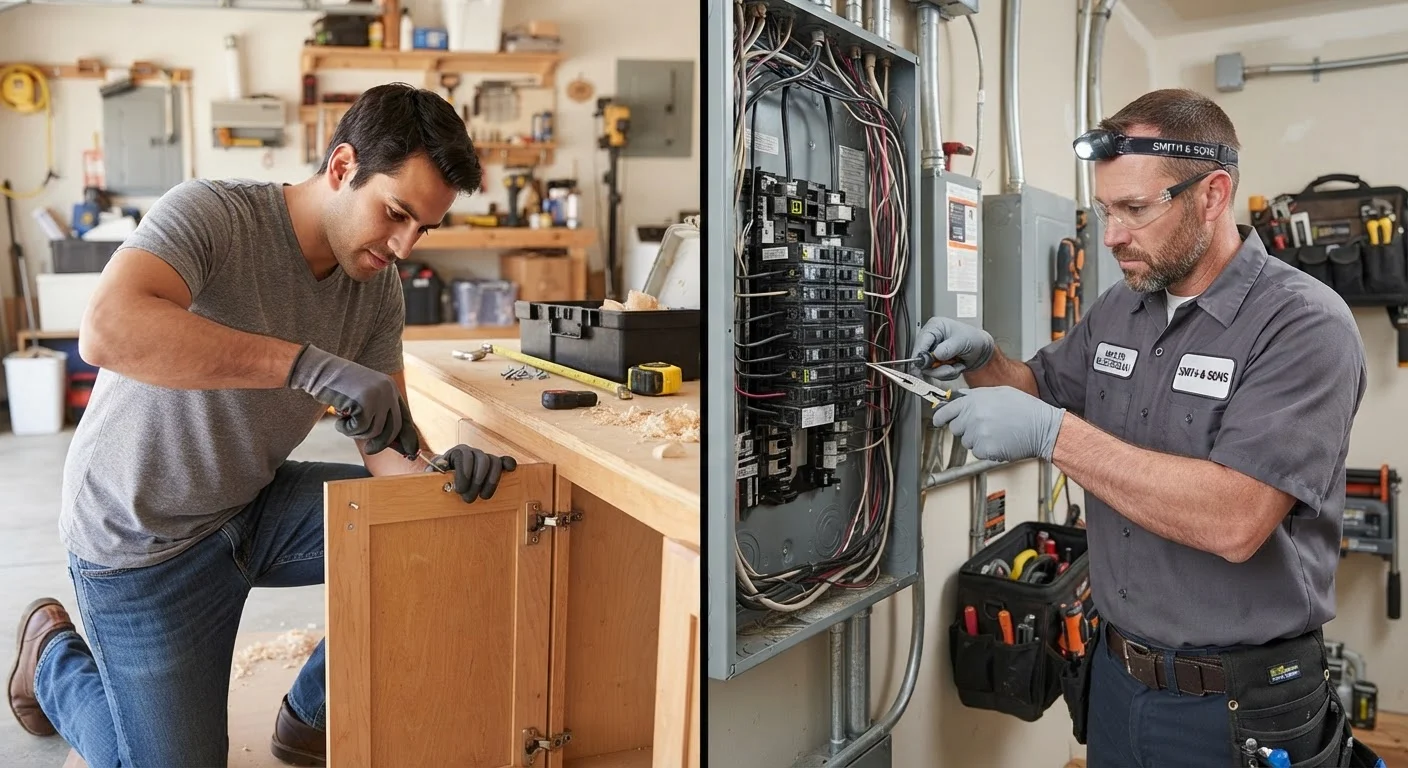
Not every repair is worth doing yourself, and not every job requires a contractor. Here is how to honestly assess which path makes sense.
Our Verdict
DIY is a genuine money-saver for a wide range of cosmetic, maintenance, and low-risk repair tasks. For anything involving structural integrity, licensed trades, or permit requirements, hiring a qualified professional is the financially sound choice in the long run. The deciding factors are honest skill assessment, the consequence of failure, and whether a permit is legally required.
| Best for | Recommended |
|---|---|
| Homeowners with basic tool skills and time to spare | DIY for cosmetic and low-risk repairs |
| Anyone facing electrical, gas, or structural work | Licensed professional |
| Mid-skill homeowners tackling a first tiling or drywall project | DIY with research and proper materials |
| Homeowners on tight timelines or without proper tools | Hiring a pro to avoid compounding costs |
Key takeaways
- DIY saves money on simple repairs, but the wrong job done incorrectly can cost more to fix than hiring out from the start.
- Electrical, gas, structural, and plumbing-into-mains work typically requires licensed professionals and local permits.
- Honest self-assessment of tools, time, and skill level is the most reliable way to choose the right path.
- Some jobs carry safety and code compliance risks that make professional hiring non-negotiable.
- Mid-complexity tasks like tile, drywall, and landscaping are often good candidates for learning DIY with proper preparation.
The real question behind every repair decision
Every home repair starts the same way: something breaks, and you immediately start weighing whether to grab a tool or pick up the phone. The honest answer depends on four things: your actual skill level, the tools you have access to, what happens if the job goes wrong, and whether local code requires a licensed trade to do it legally.
Frugal homeownership is not about doing everything yourself. It is about spending money where it creates value and avoiding the expensive rework that comes from a job done past your skill ceiling. Deferred maintenance has real costs, and so does a botched repair.
Jobs that belong in the DIY column
A wide range of common household tasks are well within reach for homeowners who are willing to research the process, gather the right materials, and work carefully. These jobs share a few traits: failure is low-stakes, materials are forgiving, and the work is visible enough that mistakes are obvious before they cause damage.
- Painting interior walls and trim
- Caulking around tubs, sinks, and windows (done with proper prep and material selection; see why caulk quality matters)
- Replacing hardware, light fixtures on existing circuits, and faucet aerators
- Patching small drywall holes
- Basic landscaping, mulching, and garden bed maintenance
- Weatherstripping doors and windows
- Cleaning gutters and downspout extensions
For this category, your main costs are materials and time. Choosing the right materials and technique determines whether the fix holds for years or needs redoing in months.
| Task type | DIY | Hire a pro | |
|---|---|---|---|
| Typical cost driver | Materials and your time | Labor plus materials | |
| Skill required | Low to moderate for most home repairs | Licensed trade for regulated work | |
| Permit usually needed | Rarely for cosmetic/maintenance work | Yes for electrical, gas, structural | |
| Risk of costly rework | Low if task matches skill level | Low when contractor is licensed | |
| Time investment | Higher, especially for first attempt | Minimal for homeowner | |
| Insurance/code implications | None for routine maintenance | Required for regulated work |
Jobs that require a licensed professional
Some work is not a skill-level question. Electrical panel upgrades, new circuit installation, gas line work, structural modifications, and main plumbing connections are regulated in most U.S. jurisdictions. Doing them without a permit and a licensed trade is illegal in many areas, can void homeowners insurance, and creates liability problems when you sell. The financial exposure from unpermitted work far exceeds any labor savings.
Work that generally requires a licensed professional:
- Electrical panel replacement or new circuit runs
- Gas line installation, repair, or appliance connection
- Structural changes including load-bearing wall removal
- Roofing (in most jurisdictions, and for any work above a single story)
- HVAC system installation or refrigerant handling
- Plumbing connections into main supply or drain lines
Before starting any project in this category, verify your local permit requirements through your municipality's building department. Requirements vary by state and county. A qualified contractor will typically pull the permit on your behalf as part of the job.
The middle ground: tasks worth learning
Between simple maintenance and regulated trade work sits a large category of mid-complexity projects. These take more preparation than painting but do not carry the legal and safety stakes of electrical or gas work. They are often the best candidates for a first serious DIY attempt.
- Tile installation in bathrooms or kitchens
- Larger drywall repairs or full wall finishing
- Installing laminate or vinyl plank flooring
- Basic deck repairs (replacing boards, not structural posts)
- Installing a programmable or smart thermostat (on an existing compatible system)
The difference between a lasting result and an expensive redo in this category usually comes down to surface preparation and using the correct products. Taking time to read manufacturer instructions and, where relevant, local building guidelines is worth more than any shortcut. Use your seasonal maintenance checklist to identify these projects before they become emergencies.
How to make the call honestly
A practical decision framework cuts through the uncertainty. Work through these questions before committing either way.
- What is the consequence of failure? Water damage, structural compromise, fire risk, or code violation all point toward professional help.
- Do you have the right tools? Renting or buying specialized tools for a one-time job often narrows the cost gap with hiring out more than people expect.
- Is a permit required? Call your local building department if you are unsure. This is not optional.
- How long will it realistically take you? A two-hour professional job can stretch to a full weekend for a first-timer. Factor your time honestly.
- Have you done something similar before? Adjacent skills transfer. Someone comfortable with basic carpentry can learn deck board replacement far more safely than someone starting from zero.
When the answers to questions one through three raise any red flags, hire a licensed professional. The cost of a qualified contractor is almost always less than the cost of fixing a failed repair, remedying water or fire damage, or addressing code violations at resale.
This article provides general home maintenance information only. Always verify local permit and code requirements with your municipality before starting any repair or renovation project, and consult a licensed professional for work involving electrical, gas, structural, or plumbing systems.
The content provided on our blog site traverses numerous categories, offering readers valuable and practical information. Readers can use the editorial team’s research and data to gain more insights into their topics of interest. However, they are requested not to treat the articles as conclusive. The website team cannot be held responsible for differences in data or inaccuracies found across other platforms. Please also note that the site might also miss out on various schemes and offers available that the readers may find more beneficial than the ones we cover.