
Paint, Pillows, and Perception: Low-Cost Ways to Refresh a Room

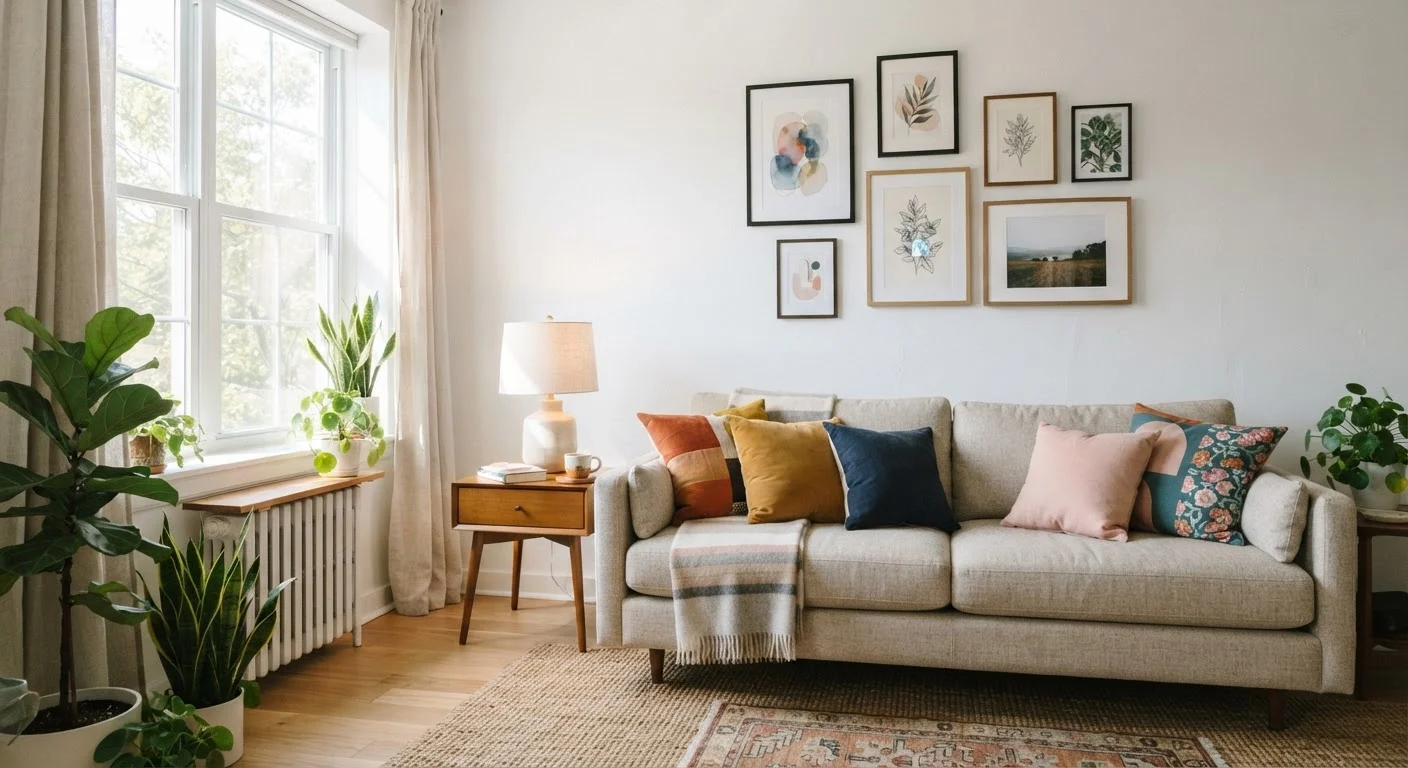
Small décor changes can dramatically shift how a room feels. Here are practical, affordable approaches that go beyond surface-level advice.
Key takeaways
- A single wall painted in an accent color costs under $30 and visually reshapes a room.
- Swapping throw pillows and covers is one of the fastest ways to change a room's mood.
- Lighting placement, not just bulb type, determines how warm or spacious a space feels.
- Decluttering before any decorating decision saves money and produces better results.
- Rearranging furniture is free and can make a room feel larger or more functional.
Why perception matters more than square footage
A room does not have to be renovated to feel different. The way light hits a wall, how furniture anchors a space, and where the eye lands first all shape how a room reads. These are factors you can control without a contractor, a large budget, or a weekend lost to a big project.
The tips below focus on changes that cost little but shift a lot. Some are free. None require permits or professional trades. For readers who also want to stay ahead of actual wear and damage, the seasonal home maintenance checklist is a useful companion to this kind of surface-level work.
Paint one wall instead of four
Full room repaints are time-consuming and can cost $100 or more in materials. A single accent wall uses roughly a quart of paint, which typically runs $12 to $25 depending on finish and brand. The visual effect is proportionally much larger than the cost difference.
Choose the wall that the eye naturally goes to first when entering the room, usually the one directly opposite the door. A deeper or contrasting color on that wall creates a sense of depth without the commitment of painting everything. Flat or eggshell finishes work well for this; avoid high-gloss on large surfaces unless you want to draw attention to imperfections.
A single accent wall costs under $25 and does more visual work than painting the whole room.
Replace pillow covers, not pillows
Throw pillow inserts are durable and rarely need replacing. The covers are what show age and go out of style. Pillow covers in standard sizes (18x18, 20x20) are widely available for $6 to $15 each, and swapping four covers can change the color story of an entire seating area.
Buy covers that share one color with something already in the room, such as a rug, curtain, or artwork. This creates visual connection without making the room feel designed by committee. Solid covers tend to hold up better over time and work with more arrangements than heavily patterned ones.
Swapping covers rather than whole pillows cuts the cost of a refresh by 60 to 80 percent.
Rearrange the furniture before buying anything new
Furniture placement shapes traffic flow, determines how light moves through a space, and controls where the eye rests. Most rooms have never had their layout reconsidered after the initial move-in arrangement. Pulling a sofa away from the wall, rotating a bed 90 degrees, or floating a rug under furniture rather than against baseboards can make a room feel more intentional and more spacious.
A general principle: furniture that floats in a room (not pushed against every wall) usually feels more comfortable and looks more considered. This is especially true in living rooms where conversation is the primary activity.
Rearranging furniture costs nothing and is the most underused room-refresh strategy available.
Change the light, not just the bulb
Overhead lighting makes most rooms feel flat and institutional. Adding a floor lamp or table lamp in a corner brings light down to eye level, which immediately makes a space feel warmer. Used floor lamps at thrift stores often run $10 to $25 and accept standard bulbs.
Bulb color temperature matters too. Bulbs labeled 2700K to 3000K produce warm white light suited to living spaces. Bulbs at 4000K and above are cooler and better for task areas like kitchens or home offices. Replacing cool overhead bulbs with warm ones in a bedroom or living room costs around $5 to $10 total and changes the atmosphere considerably.
A $15 thrift-store floor lamp changes how a room feels more than a new overhead fixture at ten times the price.
Frame what you already own
Blank walls are common in rooms that feel unfinished, but artwork does not have to be purchased. Maps, pages from calendars, fabric swatches, or printed photos from a home printer all work as wall art when framed consistently. A set of three matching frames in the same finish (black, white, or natural wood) pulls disparate pieces together visually.
Basic frames in standard sizes are available at discount home goods stores for $3 to $8 each. Group them in odd numbers on a single wall rather than scattering them across multiple walls. A tight cluster of five or seven frames registers as a deliberate design choice; the same pieces spread around a room look forgotten.
Framing items you already own in matching frames costs under $30 and makes a wall look intentional.
Use a rug to define a zone
In open-plan spaces or large rooms, a rug anchors a seating or work area and gives it a defined boundary. The rug does not need to be new. A rug from another room, reoriented or moved to a new location, can visually reorganize a space for free.
If buying, focus on size. A rug that is too small floats in the middle of a room and makes the space look smaller, not larger. In a living room, the front legs of a sofa and chairs should sit on the rug. In a bedroom, the rug should extend at least 18 inches beyond each side of the bed. Getting the size right matters more than the pattern or color.
Rug size has more impact on how a room reads than rug pattern or color ever will.
Putting it together without overspending
The most common mistake in budget decorating is buying new things before removing old ones. Declutter first. Pull everything off shelves and surfaces, live with the blank space for a day, and then decide what earns its place back. This single step, which costs nothing, tends to produce a cleaner result than any purchase.
When you do spend, buy one category at a time rather than refreshing a whole room at once. A new set of pillow covers this month, a can of paint next month, a floor lamp the month after. Spreading purchases out lets you see the effect of each change and avoid the impulse buys that quietly inflate a decorating budget. For a clear look at how that kind of spending adds up, see our piece on shopping habits that inflate the family budget.
Start with what you already have
Before any purchase, do a full audit of items stored in closets, the garage, or other rooms. Decorative objects, lamps, frames, and textiles often migrate out of sight and are forgotten. Reintroducing them in a new context costs nothing and sometimes produces better results than buying something new.
These changes are cosmetic and do not substitute for real maintenance. If a room feels off because of a structural issue, a moisture problem, or aging infrastructure, a decorating refresh will not fix that. See weekend repairs that actually hold up for guidance on what to tackle yourself and when to call a professional.
The content provided on our blog site traverses numerous categories, offering readers valuable and practical information. Readers can use the editorial team’s research and data to gain more insights into their topics of interest. However, they are requested not to treat the articles as conclusive. The website team cannot be held responsible for differences in data or inaccuracies found across other platforms. Please also note that the site might also miss out on various schemes and offers available that the readers may find more beneficial than the ones we cover.