
Eating Well on a Tight Budget: What Nutrition Science Actually Says

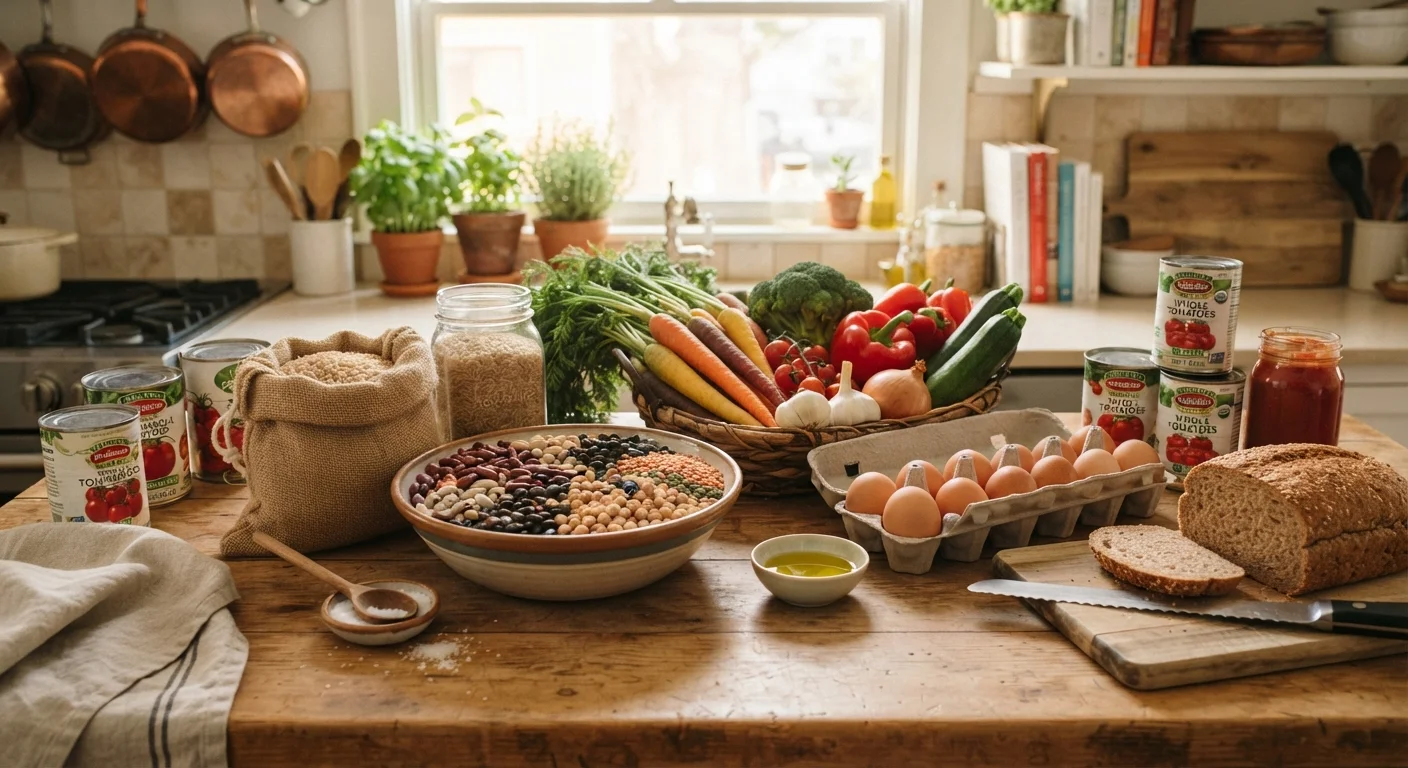
Explore what research says about affordable, nutritious eating patterns and how families can apply those principles without overspending.
Key takeaways
- Dried legumes, whole grains, eggs, and frozen vegetables consistently rank high on nutrient-per-dollar measures.
- Dietary patterns matter more than individual superfoods, and research supports plant-heavy eating as both healthy and low cost.
- Meal planning and batch cooking reduce both food waste and total weekly spending.
- Store-brand canned and frozen produce is nutritionally comparable to fresh name-brand alternatives.
- Protein needs can be met largely through plant sources, which cost a fraction of most meat options.
What nutrition research actually shows about cost
A persistent assumption holds that eating well costs more. The evidence is more complicated. Research published by the USDA Economic Research Service has found that when food is measured by nutrient content per dollar rather than by calorie or weight, many plant-based staples, such as beans, lentils, oats, and canned tomatoes, rank among the most economical sources of nutrition available in American grocery stores.
The challenge is that most families compare prices by package or portion size, which can make chips look cheaper than carrots. When cost is measured against nutritional yield, the picture shifts. Common misconceptions about healthy eating and cost often trace back to this comparison problem.
No single food makes or breaks a diet. What matters is the overall pattern: a diet built around vegetables, legumes, whole grains, and modest amounts of animal protein tends to score well on both health outcomes and cost, according to public health dietary guidance.
$0.15
Approximate cost per serving of dried lentils
USDA Economic Research Service data shows dried legumes are among the lowest-cost protein sources available in US grocery stores.
30%
Average share of US household food spending lost to waste
USDA estimates suggest roughly 30 to 40 percent of the US food supply is wasted, with household-level waste a significant contributor to inflated grocery budgets.
2x
Cost difference between plant and animal protein per gram
Analysis of retail food prices consistently finds plant-based proteins cost roughly half or less per gram of protein compared to most beef and pork cuts.
The most affordable high-nutrition foods
Dried lentils and split peas are among the most nutrient-dense foods per dollar available in most US grocery stores. A one-pound bag typically yields eight or more servings of protein, fiber, iron, and folate. Canned beans offer similar value with added convenience, at a modest premium over dried.
Eggs remain one of the most complete protein sources at low cost per gram. Oats supply soluble fiber linked to heart health and cost little per serving. Frozen spinach, broccoli, and mixed vegetables provide vitamins A, C, and K at prices lower than their fresh counterparts during most of the year.
Brown rice and whole wheat pasta add filling complex carbohydrates. Canned fish such as sardines and tuna supply omega-3 fatty acids and protein at a fraction of the cost of fresh fish. Families interested in growing some of their own produce can find practical guidance in starting a vegetable garden without spending much.
How meal planning closes the gap between intention and practice
Knowing which foods are affordable and nutritious does not automatically change what ends up on the table. Meal planning is the practical bridge. Families who plan weekly menus before shopping consistently report lower food waste and more predictable grocery spending.
Batch cooking, such as preparing a large pot of beans or a grain like farro on one day and using it across several meals, reduces both time and per-meal cost. This approach also limits reliance on processed convenience foods, which tend to win at the shelf partly because they require no preparation.
A cost-and-health comparison of whole foods versus processed options shows that even modest substitutions, like replacing packaged snacks with boiled eggs or apple slices, improve nutritional quality without raising costs. Checking for spending habits that quietly inflate the grocery bill can also free up room in the food budget.
Start with one meal swap per week
Replacing one meat-centered meal with a legume-based alternative is a manageable first step. Try a pot of lentil soup or black bean chili. Both freeze well, which means cooking once covers multiple meals and reduces total time in the kitchen.
Putting it together for a real family budget
A family of four can build a nutritionally adequate weekly menu around roughly these categories: dried or canned legumes for protein and fiber, whole grains for sustained energy, eggs for versatile low-cost protein, and frozen or canned vegetables for micronutrients. Occasional small portions of meat or fish can round out the plate without dominating the budget.
The family finance basics framework applies here: track what you spend on food for two weeks, identify which items offer the least nutritional return per dollar, and substitute gradually rather than overhauling everything at once. Incremental changes are more durable than total overhauls.
Building a broader family wellness routine works the same way: small, consistent changes stack over time. Families new to this approach may find it useful to start with a foundational overview of affordable family wellness before making larger changes.
This article is for general informational purposes only and is not medical or dietary advice. Consult a registered dietitian or qualified healthcare professional before making significant changes to your family's diet, especially if any household member has a chronic health condition.
Frequently Asked Questions
The content provided on our blog site traverses numerous categories, offering readers valuable and practical information. Readers can use the editorial team’s research and data to gain more insights into their topics of interest. However, they are requested not to treat the articles as conclusive. The website team cannot be held responsible for differences in data or inaccuracies found across other platforms. Please also note that the site might also miss out on various schemes and offers available that the readers may find more beneficial than the ones we cover.