
Why Cheap Processed Snacks Keep Winning at the Grocery Store

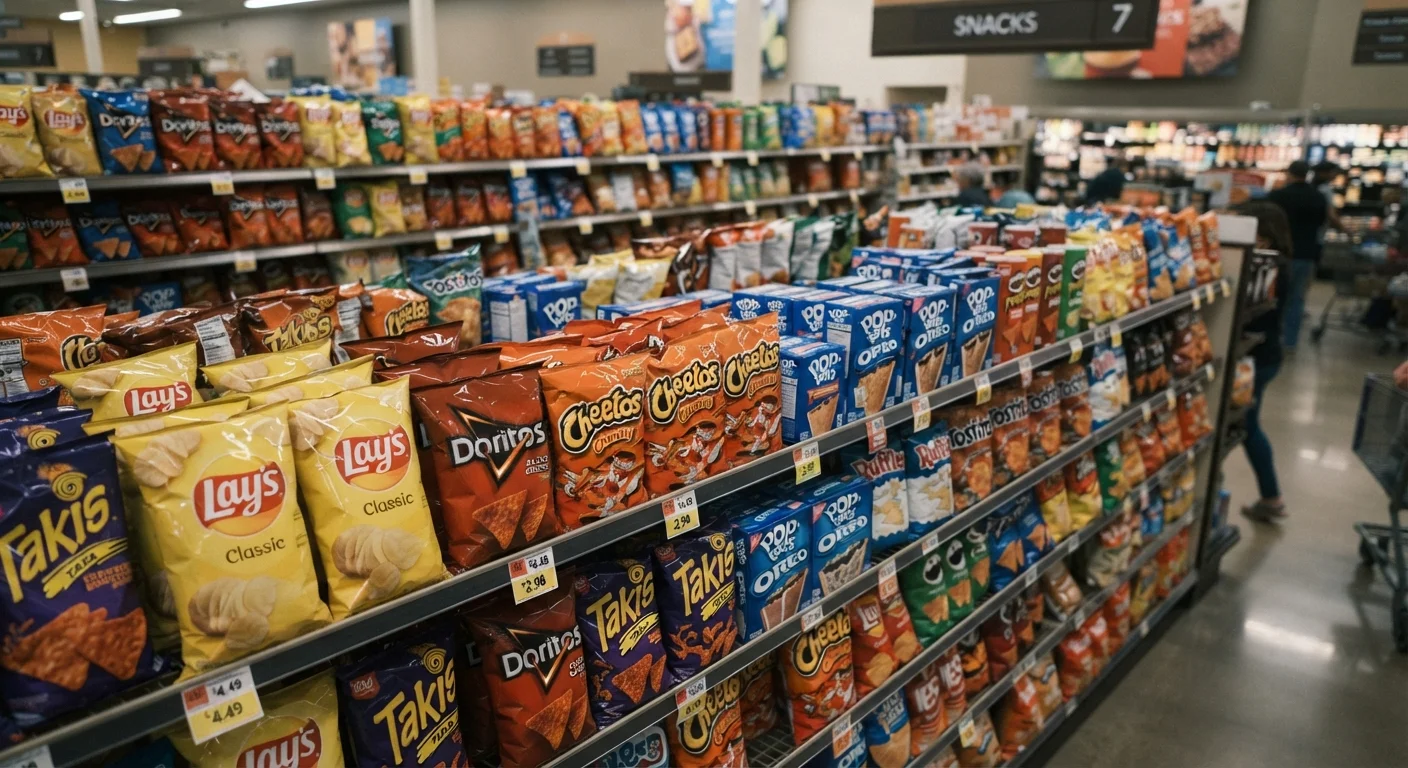
Understanding why families reach for low-cost processed foods, and the practical barriers that make healthier choices feel harder, is the first step to change.
Key takeaways
- Cheap processed snacks are engineered to feel satisfying, which makes them hard to pass over on a tight budget.
- Several common shopping habits make ultra-processed foods the default choice, even when families want to eat better.
- Small, concrete adjustments to meal planning and store navigation can shift purchasing patterns without raising costs.
- Understanding the real per-serving cost of whole foods versus packaged snacks often changes the math families thought they knew.
Why processed snacks have a structural advantage
Cheap processed snacks do not win at the grocery store by accident. They win because they are priced, placed, and formulated to remove the friction that makes any other choice feel harder. For families managing a tight grocery budget, these structural advantages stack up in ways that are worth understanding clearly.
The food industry spends significant resources on shelf placement, packaging design, and product formulation. Items placed at eye level sell faster. End-cap displays near checkout lanes are premium real estate for the highest-margin products. Bright packaging and bold claims about flavor or value catch attention during a fast shopping trip. None of this is hidden, but it works precisely because most shoppers are moving quickly and making dozens of small decisions under cognitive and financial pressure.
Families who want to shift their snack spending in a healthier direction benefit from seeing these mechanics for what they are: system-level forces rather than personal failures. The patterns behind grocery overspending show that snack purchases are one of the most consistent budget leaks across household income levels.
The mistakes that keep processed snacks in the cart
Comparing the shelf price of a snack pack to the shelf price of a whole food without accounting for servings.
Why it happens: A $1.29 bag of chips looks cheaper than a $1.79 bunch of bananas at a glance. Families under time and budget pressure make fast visual comparisons rather than calculating cost per serving or cost per calorie.
Treating hunger as a personal willpower problem rather than a design problem.
Why it happens: Packaged snack foods are formulated with specific combinations of salt, fat, and sugar that slow the brain's satiety signal. Reaching for another handful is not a character flaw; it is a predictable response to how these products are made.
Shopping without a list and browsing the center aisles when hungry.
Why it happens: Grocery stores place the highest-margin processed snacks at eye level and at the ends of aisles specifically to capture unplanned purchases. Hunger amplifies the appeal of calorie-dense, convenient-looking packaging.
Buying processed snacks in bulk because the per-unit price is low, without considering total consumption.
Why it happens: Warehouse-sized bags seem like smart frugality. However, research consistently shows that larger package sizes lead to faster consumption, which offsets the per-unit savings and may increase overall spending.
Assuming that any whole or minimally processed food costs more than its packaged equivalent.
Why it happens: Health food marketing and premium organic pricing have created a widespread impression that eating better automatically means spending more. This perception leads families to rule out nutritious options before checking actual prices.
Skipping meal planning and relying on snacks to fill gaps between unplanned meals.
Why it happens: Without a rough plan for weekday meals, hungry family members default to whatever is fastest, which is almost always a packaged snack. This pattern adds cost without adding nutritional value.
This article is for informational purposes only and is not dietary or medical advice. Consult a qualified healthcare provider or registered dietitian for guidance specific to your family's health needs.
What a realistic shift looks like
This is general information, not medical advice
The information in this article is for educational purposes only and does not constitute dietary or medical advice. Every family's health needs differ. Consult a registered dietitian or qualified healthcare provider before making significant changes to your household's eating patterns, especially if any family member has a chronic condition or specific nutritional requirements.
Changing snack habits does not require a complete pantry overhaul or a higher grocery budget. The adjustments with the most impact are procedural: list-making before shopping, portioning bulk items on the day of purchase, and having one or two low-cost whole-food options within easy reach when hunger peaks.
Families that work through the Family Finance Basics framework often find that grocery spending and nutritional quality improve together once the planning habits are in place. Similarly, the Smart Shopping Habits strategies help reduce impulse snack purchases at the store level. Small changes to how and when food decisions are made tend to compound over weeks in ways that a single shopping trip swap does not.
The content provided on our blog site traverses numerous categories, offering readers valuable and practical information. Readers can use the editorial team’s research and data to gain more insights into their topics of interest. However, they are requested not to treat the articles as conclusive. The website team cannot be held responsible for differences in data or inaccuracies found across other platforms. Please also note that the site might also miss out on various schemes and offers available that the readers may find more beneficial than the ones we cover.