
Free and Low-Cost Ways to Stay Active as a Family

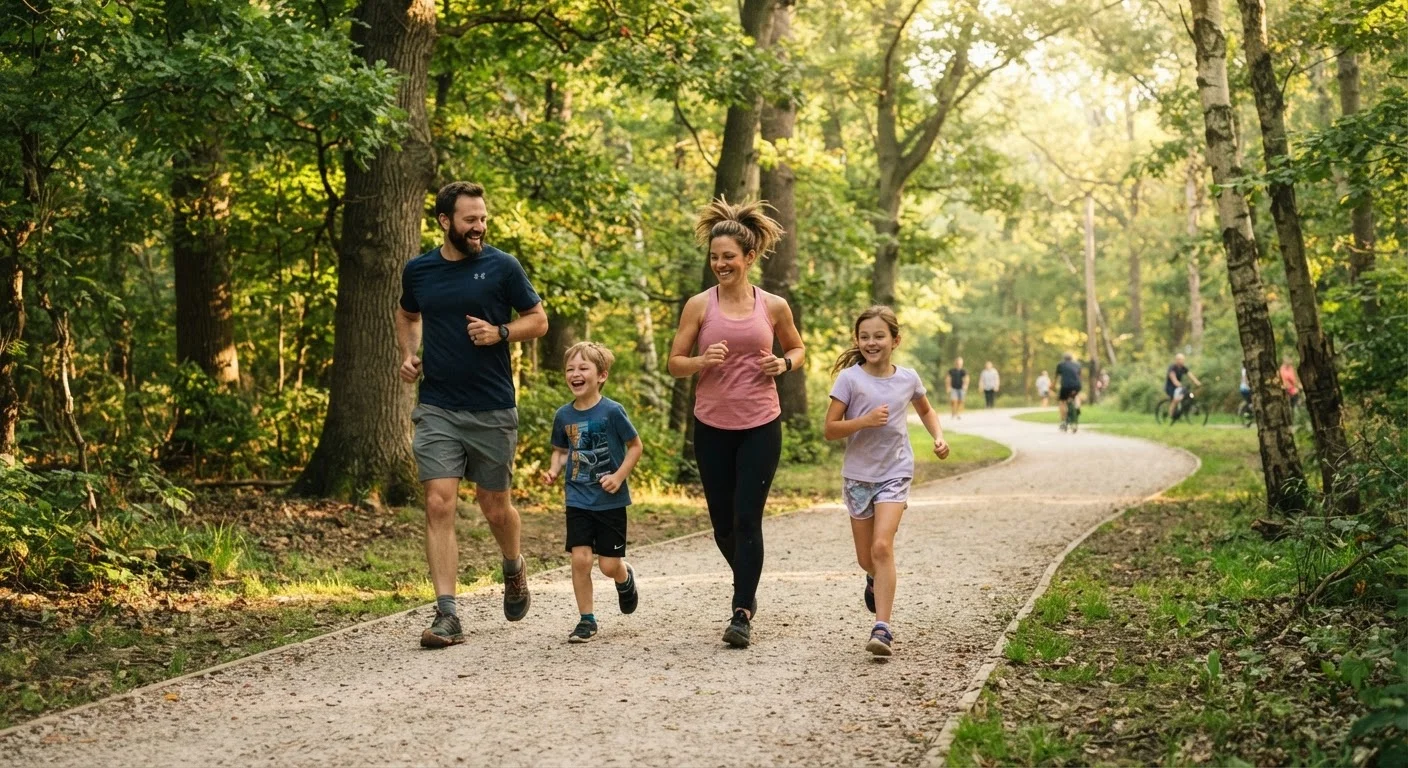
Gym memberships are not required for regular physical activity. Discover accessible, no-cost habits that support fitness for the whole household.
Key takeaways
- Public parks, trails, and recreation centers offer substantial physical activity opportunities at little or no cost.
- Consistency matters more than intensity: short daily movement sessions add up significantly over a week.
- Many community programs and library resources provide free fitness classes and equipment lending.
- Reframing everyday tasks as movement opportunities reduces the barrier to regular family exercise.
- Active play for children and structured walks for adults can meet federal physical activity guidelines without gym fees.
Why free activity options are worth taking seriously
Gym memberships carry an average annual cost that places them out of reach for many median-income households, particularly when multiplied across a family. The good news is that the health benefits of regular physical activity do not depend on expensive facilities or equipment. Structured movement, whether it happens on a city trail, in a backyard, or in a living room, produces comparable outcomes to gym-based exercise when performed consistently.
This article covers six concrete approaches that cost little or nothing. If you are new to thinking about family health more broadly, the starting point guide for families new to wellness provides useful background before working through the options below.
Use public parks and trail systems
Most US counties maintain free public parks with walking paths, sports courts, open fields, and playgrounds. The National Park Service also offers free admission days throughout the year, and national forests are generally accessible without entry fees. A family that commits to a 30-minute park walk three times per week accumulates meaningful cardiovascular activity over a month, with no recurring cost.
Look for trail maps through your county parks department website or the AllTrails platform, which lists many free public routes. Varying the trail keeps activity from feeling repetitive for children.
A family that walks a local trail three times per week accumulates meaningful cardiovascular activity at zero cost.
Take advantage of free recreation center programs
Many municipal recreation centers offer free or sliding-scale programming for residents. Drop-in gym access, open swim hours, and structured fitness classes are frequently available at substantially lower rates than commercial gyms. Some centers offer free family swim nights or seasonal sports leagues with minimal registration fees.
Income-based fee waivers are available at recreation centers in most major US cities; checking with your local parks and recreation department directly is the most reliable way to find what applies to your household. The step-by-step guide to building a family wellness routine covers how to schedule these sessions realistically alongside work and school commitments.
Income-based fee waivers at municipal recreation centers are widely available but rarely advertised prominently.
Turn everyday movement into structured activity
Walking or biking to school, doing yard work together, or taking stairs consistently contributes to weekly physical activity totals. The US Department of Health and Human Services recommends that children aged 6 to 17 get at least 60 minutes of moderate-to-vigorous activity per day; adults need at least 150 minutes of moderate activity per week. Both targets are achievable through accumulated daily movement rather than dedicated gym sessions.
Assigning age-appropriate outdoor chores, like raking leaves or shoveling snow, doubles as physical activity and teaches household responsibility. Tracking steps with a free smartphone app gives the family a shared goal without equipment costs. See the weekly family wellness check for a practical way to assess whether your household is hitting movement targets each week.
Federal physical activity guidelines for both children and adults can be met through accumulated daily movement, not gym visits.
Stream free workout videos at home
YouTube hosts thousands of structured workout programs, including beginner cardio, family yoga, bodyweight strength training, and kids' dance workouts, all free of charge. Public libraries in many counties also provide free digital access to fitness platforms through services like Kanopy or Hoopla, and some libraries lend exercise equipment directly.
A consistent 20-minute home workout three times per week is more sustainable for most families than sporadic longer sessions. Choosing videos that work for mixed ages, where a toddler and a parent can participate simultaneously, reduces the childcare barrier that often interrupts adult exercise time.
Public libraries in many counties provide free digital access to fitness platforms that would otherwise require a paid subscription.
Join community sports and walking groups
Many neighborhoods have free or low-cost recreational leagues for soccer, basketball, softball, and volleyball organized through schools, churches, or local nonprofits. Walking clubs coordinated through community Facebook groups or Nextdoor require no equipment and provide social accountability that makes sustained activity more likely.
The regional guide to free and low-cost family activities lists location-specific options if you are looking for organized outdoor events near you. Community involvement also builds the kind of social connection that public health research consistently links to better overall health outcomes.
Social accountability through a walking group or community sports league increases the likelihood of sticking with regular activity.
Use school and church facility open times
Many public school gymnasiums and fields are open to community members outside of school hours, particularly on weekends. Local churches and community centers similarly make their facilities available for open recreation at no charge. These spaces often include basketball courts, open gyms, and fields suitable for pickup games or free play.
Contact your school district's community use office or local faith communities directly to ask about schedules. Combining this with low-cost home improvements, such as setting up a simple backyard play space, extends the options available without adding membership fees.
Public school gymnasiums and fields are often open to community members on weekends at no charge.
Making it stick without spending more
The biggest obstacle to regular family activity is usually scheduling, not cost. Treating movement as a fixed weekly appointment, rather than something that happens when time allows, is the single habit shift with the most practical impact. Putting two or three weekly activity slots on a shared household calendar gives each session the same standing as school pickups or work meetings.
A note on physical activity guidelines
The physical activity recommendations cited in this article come from the US Department of Health and Human Services Physical Activity Guidelines for Americans. These are general population-level guidelines, not personalized medical advice. Families with members who have chronic health conditions, mobility limitations, or recent injuries should consult a qualified healthcare provider before making significant changes to their activity levels.
Families interested in connecting active living with broader financial habits can find relevant framing in the family finance basics hub, which covers everyday money decisions that affect how much room a budget has for health and recreation. For families who also travel, many of the same no-cost activity principles apply on the road: the guide to budget travel myths addresses common misconceptions about the cost of active family trips.
This article provides general health and wellness information for educational purposes only. It is not a substitute for advice from a qualified healthcare provider. Consult a licensed medical professional before making significant changes to your family's physical activity routine, particularly for household members with existing health conditions.
The content provided on our blog site traverses numerous categories, offering readers valuable and practical information. Readers can use the editorial team’s research and data to gain more insights into their topics of interest. However, they are requested not to treat the articles as conclusive. The website team cannot be held responsible for differences in data or inaccuracies found across other platforms. Please also note that the site might also miss out on various schemes and offers available that the readers may find more beneficial than the ones we cover.