
The Myths That Make Healthy Eating Feel Expensive

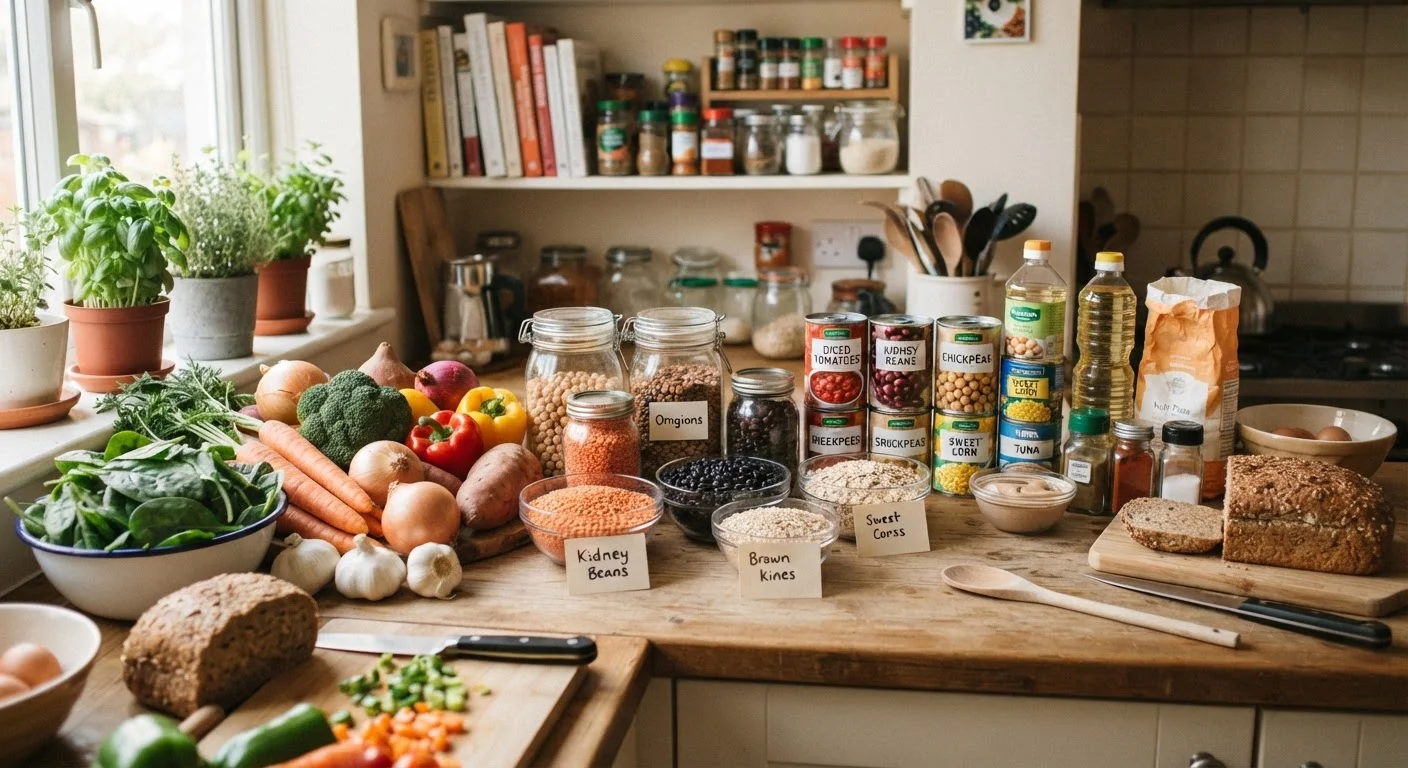
Many families assume nutritious food costs more. Here are the most common misconceptions about health and budget, and what the evidence actually shows.
Key takeaways
- Whole grains, dried legumes, and frozen produce are among the most affordable nutritious foods available.
- Cost-per-nutrient comparisons often favor whole foods over heavily processed alternatives.
- Meal planning and cooking in bulk can reduce weekly food costs without sacrificing nutrition.
- Organic labels do not equal healthier outcomes for most families on a tight budget.
- SNAP and WIC benefits can be used to purchase many nutritious staple foods.
Where these myths come from
Most families form beliefs about food costs from a combination of grocery store experiences, advertising, and anecdote rather than systematic comparison. Premium health foods occupy prominent shelf space and carry high price tags, which anchors the assumption that eating well is expensive. Processed foods, by contrast, are aggressively priced at unit levels that feel accessible, particularly for large households watching every dollar.
These perceptions are not random. Structural factors in grocery retail favor high-margin packaged products, which receive more shelf space, more promotional pricing, and more marketing exposure than staple whole foods. Understanding that context helps families make more deliberate comparisons rather than accepting shelf prices at face value.
Financial beliefs operate similarly. Households that feel financially constrained often default to familiar purchasing patterns even when those patterns cost more over time. Common money misconceptions can reinforce food spending habits that feel budget-conscious but are not.
Myth
Eating healthy always costs more than eating on a budget.
Fact
Staple foods like dried beans, lentils, oats, canned fish, and frozen vegetables are among the lowest-cost items per serving in any grocery store.
The perception that healthy food is expensive often comes from comparing premium organic or specialty items to ultra-processed convenience foods. When cost is measured per serving or per gram of protein, staples like dried lentils, rolled oats, and canned sardines frequently come in below many packaged snacks and frozen meals. A pound of dried black beans, for example, yields roughly nine half-cup servings at a fraction of the cost of a comparable volume of chips or frozen burritos. The cost-and-health breakdown between whole foods and processed options shows these gaps more clearly than a surface-level price scan.
Myth
Frozen fruits and vegetables are nutritionally inferior to fresh ones.
Fact
Most frozen produce is picked at peak ripeness and frozen quickly, which preserves the majority of vitamins and minerals.
Fresh produce loses nutrients during transit and storage. Research published in peer-reviewed food science journals has found that frozen vegetables often retain comparable or higher levels of certain vitamins, such as vitamin C and folate, compared to fresh produce stored several days after harvest. For families managing a grocery budget, frozen spinach, peas, broccoli, and mixed berries are practical, nutritious choices that reduce waste because you use only what you need.
Myth
You need organic produce to eat healthily.
Fact
Conventional fruits and vegetables provide the same essential nutrients as organic versions, and both are nutritious choices.
Organic certification relates to farming practices and permissible inputs, not to caloric content, fiber, vitamins, or minerals. Major nutrition and public health bodies do not recommend organic produce over conventional for general health purposes. For families where the organic price premium would reduce overall fruit and vegetable consumption, conventional produce is the more practical choice. Spending the budget difference on a greater variety or larger quantity of conventional vegetables and fruits generally produces better nutritional outcomes than buying less organic food.
Myth
Cooking from scratch takes too much time to be realistic for busy families.
Fact
Batch cooking a few foundational ingredients over a weekend can supply multiple weekday meals in under an hour of active effort.
A pot of rice or grains, a batch of cooked beans or lentils, and roasted vegetables can be combined into different meals across three or four days. This approach cuts per-meal cost substantially compared to prepared foods and keeps sodium and added sugar levels lower. Many families find that scheduling two or three hours on a single day reduces both cooking time and food spending for the rest of the week. Nutrition science guidance on budget eating outlines how these patterns hold up across different household sizes and income levels.
Myth
Processed snack foods are cheaper per calorie, so they are the more economical choice.
Fact
Calories from processed snacks come with low protein and fiber, which means they satisfy hunger less efficiently than nutrient-dense staples.
Cost-per-calorie comparisons can be misleading because not all calories produce the same satiety. Foods with higher protein and fiber content tend to reduce total calorie intake at later meals. Dried chickpeas, peanut butter, eggs, and oats cost relatively little per serving while providing protein and fiber that processed snack foods largely lack. Why processed snacks keep winning at the store examines the pricing and marketing factors that make this comparison feel counterintuitive.
What the numbers actually show
Researchers at the Harvard T.H. Chan School of Public Health published an analysis finding that the most nutritious dietary patterns cost roughly $1.50 more per day per person than the least nutritious ones. That figure is frequently cited to argue that healthy eating is costly, but it represents a very specific comparison at the top of the nutritional range. Families who shift from heavily processed diets to whole-food staples rather than premium health products often see costs stay flat or fall.
$1.50
Daily cost difference, healthiest vs. least healthy diets
According to a Harvard T.H. Chan School of Public Health analysis, the most nutritious dietary patterns cost about $1.50 more per person per day than the least nutritious ones.
~$0.25
Approximate cost per serving of dried lentils
Dried lentils, a high-protein, high-fiber staple, typically cost well under $0.30 per cooked half-cup serving at standard US grocery prices.
42 million
Americans participating in SNAP
The USDA reports that roughly 42 million people participate in the Supplemental Nutrition Assistance Program, which can be used to purchase many whole-food staples.
Meal planning reduces impulse purchases, which quietly inflate grocery bills more than most families realize. Writing a weekly plan before shopping, building around lower-cost protein sources like eggs, beans, and canned fish, and using frozen produce for cooked dishes rather than salads are adjustments that cost nothing to implement.
This article is for informational purposes only and is not medical or financial advice. Consult a qualified healthcare provider or financial professional for guidance specific to your household's needs.
The content provided on our blog site traverses numerous categories, offering readers valuable and practical information. Readers can use the editorial team’s research and data to gain more insights into their topics of interest. However, they are requested not to treat the articles as conclusive. The website team cannot be held responsible for differences in data or inaccuracies found across other platforms. Please also note that the site might also miss out on various schemes and offers available that the readers may find more beneficial than the ones we cover.