
Synthetic vs. Conventional Motor Oil: What Everyday Drivers Need to Know

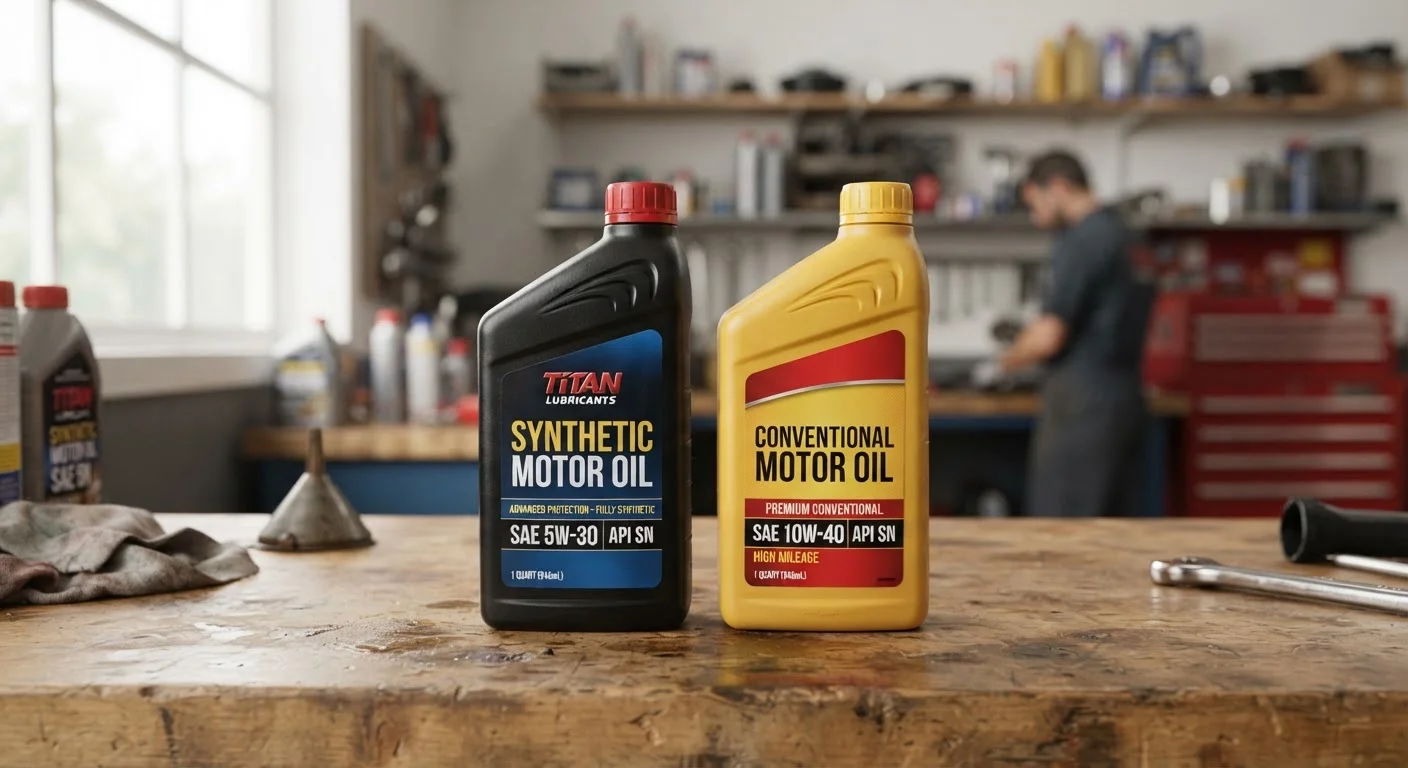
A side-by-side look at how synthetic and conventional oils differ in performance, longevity, and typical cost per oil change.
Our Verdict
Synthetic oil generally provides better engine protection and longer service intervals, which can offset its higher upfront cost for many drivers. Conventional oil remains a practical option for older, high-mileage vehicles or drivers following shorter change intervals on a tight schedule. The right choice always starts with the owner's manual.
| Best for | Recommended |
|---|---|
| Drivers with newer vehicles or turbocharged engines | Synthetic oil |
| Owners of older vehicles with high mileage on a tight budget | Conventional oil |
| Drivers in extreme climates or stop-and-go traffic conditions | Synthetic oil |
| Those whose manufacturer specifies conventional oil and drive typical conditions | Conventional oil |
Key takeaways
- Synthetic oil lasts longer between changes, typically 7,500 to 10,000 miles or more depending on your vehicle.
- Conventional oil costs less per quart but may require more frequent changes, affecting the total annual cost.
- Your owner's manual specifies which oil type your engine requires; that recommendation overrides general advice.
- Many modern vehicles, especially turbocharged engines, are engineered to run on full synthetic oil.
- The cost difference per year between oil types is often smaller than drivers expect when change intervals are factored in.
What makes these two oils different
Conventional motor oil comes from crude petroleum that is refined and blended with additives. Synthetic oil starts from the same base stock in some cases, but goes through extensive chemical processing that produces more uniform molecules. That uniformity is what gives synthetic oil its main advantages: it flows more easily in cold weather, holds up longer under heat, and breaks down more slowly over time.
Both types contain additive packages that handle tasks like reducing friction, preventing corrosion, and keeping sludge from forming. The base oil quality, however, differs considerably. If you want a plain-language explanation of terms like viscosity grades (the numbers in something like 5W-30), see our car care glossary for a quick reference.
Performance and protection compared
Synthetic oil performs better in temperature extremes. In cold starts, it reaches engine components faster because it flows more freely at low temperatures. In high heat, it resists oxidation longer, which means it keeps lubricating even after thousands of miles. Turbocharged engines, which run hotter than naturally aspirated ones, particularly benefit from this stability.
Conventional oil degrades faster under the same conditions. It is not a poor product for standard use, but it has a shorter window before its additives deplete and the oil begins to break down. For a vehicle driven in moderate conditions with no turbocharger and lower annual mileage, conventional oil does the job its manufacturer intends.
| Synthetic oil | Conventional oil | |
|---|---|---|
| Typical cost per quart | Higher (roughly $6-$10+) | Lower (roughly $4-$6) |
| Typical change interval | 7,500 to 15,000 miles | 3,000 to 5,000 miles |
| Cold-weather flow | Flows faster at low temps | Thickens more in cold |
| Heat resistance | Holds up longer under heat | Degrades faster under heat |
| Best vehicle fit | Newer, turbocharged engines | Older or standard engines |
| Annual change frequency | Fewer changes per year | More changes per year |
Synthetic blend oils sit between the two options. They mix synthetic and conventional base stocks to offer some cold-weather and longevity benefits at a lower cost than full synthetic. Some drivers use blends as a middle path when their manual allows it.
Actual cost per year: looking past the price per quart
A quart of conventional oil typically costs less than a quart of full synthetic. However, change intervals change the math. Conventional oil is often changed every 3,000 to 5,000 miles under older guidelines. Full synthetic commonly goes 7,500 to 10,000 miles or more, with some manufacturers specifying up to 15,000 miles for certain vehicles.
A driver covering 15,000 miles per year who uses conventional oil at a 5,000-mile interval pays for three oil changes annually. The same driver using full synthetic at a 10,000-mile interval pays for roughly one and a half changes. When you factor in the cost of oil and a filter, the annual totals often come closer than the per-quart price suggests.
For the full picture on what change intervals actually mean and how manufacturers set them, see our guide to oil change intervals.
What your owner's manual actually says
The most important factor in this decision is not advertising or shop recommendations: it is the oil specification your manufacturer printed in the owner's manual. Some newer engines are designed with tighter tolerances that require synthetic oil to function correctly. Using conventional oil in an engine built for synthetic can, over time, affect lubrication quality and potentially engine wear.
Conversely, if your manual specifies conventional oil and your engine has high mileage, switching to full synthetic is not always straightforward. Some older, high-mileage engines have seals that have conditioned to conventional oil, and a switch may occasionally surface pre-existing minor leaks. A qualified mechanic can advise whether a switch makes sense for your specific vehicle.
Your oil type choice fits into the broader picture of keeping up with scheduled maintenance. Understanding your full maintenance schedule helps you see where oil changes fit alongside other service items.
Check your manual before changing oil types
If you are switching from conventional to synthetic, or vice versa, read your owner's manual first. Many manufacturers specify a particular oil viscosity grade and type for warranty compliance. When in doubt, ask a licensed mechanic to confirm the right spec for your engine before making the switch.
The content provided on our blog site traverses numerous categories, offering readers valuable and practical information. Readers can use the editorial team’s research and data to gain more insights into their topics of interest. However, they are requested not to treat the articles as conclusive. The website team cannot be held responsible for differences in data or inaccuracies found across other platforms. Please also note that the site might also miss out on various schemes and offers available that the readers may find more beneficial than the ones we cover.