
Reading a Retail Sale Tag Without Getting Fooled

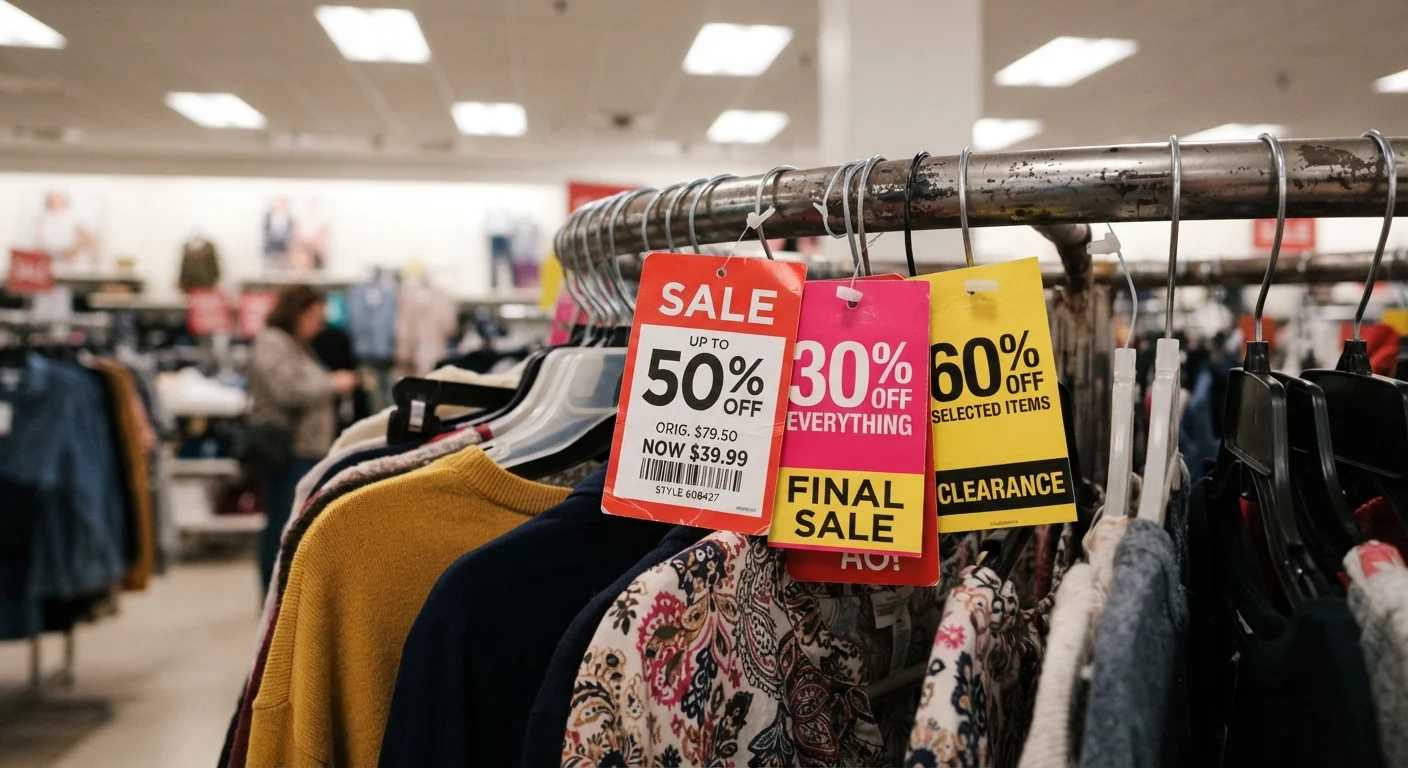
Sale tags use specific language that can mislead shoppers. This guide explains what each term legally means and what to verify before buying.
Key takeaways
- "Regular price" and "original price" on a tag are not always the same number and carry different implications.
- Terms like "up to X% off" apply to select items only, not everything marked in a sale section.
- Comparing a tag's claimed reference price against a third-party source takes under two minutes.
- State consumer protection laws govern how long a reference price must be in effect before it can be shown on a sale tag.
- The unit price shelf label often reveals more value information than the promotional tag above it.
What the words on a sale tag actually mean
Retail sale tags use a small vocabulary that sounds straightforward but has specific, sometimes legally defined, meaning. Knowing the difference can change whether a price genuinely saves you money.
"Regular price" is supposed to represent what the item sold for at that same store before the sale. Most state consumer protection regulations require that a reference price reflect a real price the store charged, for a meaningful period of time, before the markdown was applied. The exact time requirement varies by state, so the legal floor differs depending on where you shop.
"Original price" is often used interchangeably with "regular price," but some retailers use it to mean the manufacturer's suggested retail price (MSRP), which may be higher than what any store actually charged. This distinction matters: a tag showing a steep discount off MSRP can look more dramatic than a discount off the actual selling price.
"Comparable value" or "compare at" is the most loosely defined term. It typically indicates what similar goods sell for elsewhere, not what that specific item has sold for anywhere. The Federal Trade Commission's Guides Against Deceptive Pricing note that a "compare at" claim is only honest if the compared price reflects actual market prices for a genuinely comparable product. Many retailers interpret this broadly.
"Up to X% off" means the stated percentage applies to at least one item in the promoted group. It does not mean every item carries that discount. The deepest markdown qualifies the claim; most items may be off by far less.
See a full glossary of retail pricing tactics for broader context on how stores set and present prices.
How to verify a sale price before you buy
Write down the item's name, model number, and the reference price shown
Before pulling out your phone, capture the exact product identifier and the "was" or "regular" price printed on the tag. Retailers sometimes use house-brand names or store-exclusive model numbers that make cross-checking harder. If the tag says "compare at" rather than "regular price," note that distinction too, since it signals you are looking at a different type of claim.
Check the current selling price at two other retailers
Use the item's model number to search at least two other stores, including the manufacturer's own website if one exists. Note the full selling price at each, before any promotional codes or membership discounts, so you are comparing like with like. If the item is a store-exclusive, compare it against the closest equivalent model available elsewhere.
Look up the item's price history if it is sold online
Several free browser tools track the historical price of items sold online. If the item you are examining has an online equivalent, a price history chart shows whether the "regular" price on the tag matches what the item actually sold for over time, or whether that reference price existed only briefly before the sale began. A pattern of near-constant discounting suggests the sale price is the real everyday price.
Read the fine print on the sale sign, not just the tag
Sale signs near a product often contain exclusions, quantity limits, or qualifying conditions that do not appear on the individual tag. Check for phrases like "select styles only," "while supplies last" when paired with a specific quantity cap, or membership requirements. These modify what the posted discount actually applies to.
Calculate the actual dollar savings, not just the percentage
A 40% discount on a $12 item is $4.80 saved. The same percentage on a $200 item is $80. Percentage framing makes small absolute savings look large and makes large absolute savings feel abstract. Calculate the dollar amount you are actually retaining to judge whether the purchase fits your budget priorities, independent of how dramatic the percentage sounds.
Once you complete these steps, you will have the information needed to decide whether the marked discount is real. For a fuller pre-checkout routine, see the pre-purchase audit checklist.
Common tag formats that cause confusion
Several physical tag formats mislead shoppers even when the wording is technically accurate.
Multiple price stickers. When a new price sticker covers an older one, shoppers sometimes assume the bottom sticker is the original price. Peeling back or inspecting the tag may show the item was already marked down before the current "sale" tag was applied, meaning the claimed savings span two incremental markdowns, not one dramatic cut.
Color-coded clearance systems. Many stores use tag color to indicate markdown depth, and they rotate the color scheme by season. A red tag that meant 30% off last month may mean 50% off this month, or vice versa. Unless you read the posted signage explaining that week's color key, the tag color alone tells you nothing reliable about the percentage.
Bundled pricing on multi-packs. A tag reading "3 for $9" does not always mean individual items cost $3. Some stores charge more per unit if you buy fewer than the stated quantity. Others charge the same per-unit price regardless. Checking the unit price label on the shelf edge clarifies this quickly. The unit price math guide explains how to read those labels accurately.
"Was / Now" tags without dates. A tag showing a "was" price with no date gives no indication of how long ago that price applied or whether it was ever a standard selling price at that location. Treat undated reference prices as unverified claims until you can check them against another source.
Retailers follow predictable markdown schedules. Understanding those cycles helps you judge whether a current sale price is likely close to the seasonal floor or still early in a markdown sequence. The seasonal retail cycle guide covers that timing in detail.
When the tag and the register price disagree
In most states, if a shelf tag or posted price is lower than what scans at the register, the retailer is legally required to honor the lower price. Ask a manager before completing the transaction. Keep the tag or a photo of the sign as documentation.
The content provided on our blog site traverses numerous categories, offering readers valuable and practical information. Readers can use the editorial team’s research and data to gain more insights into their topics of interest. However, they are requested not to treat the articles as conclusive. The website team cannot be held responsible for differences in data or inaccuracies found across other platforms. Please also note that the site might also miss out on various schemes and offers available that the readers may find more beneficial than the ones we cover.