
Stretching a Week of Travel Across the American Southwest on a Tight Budget

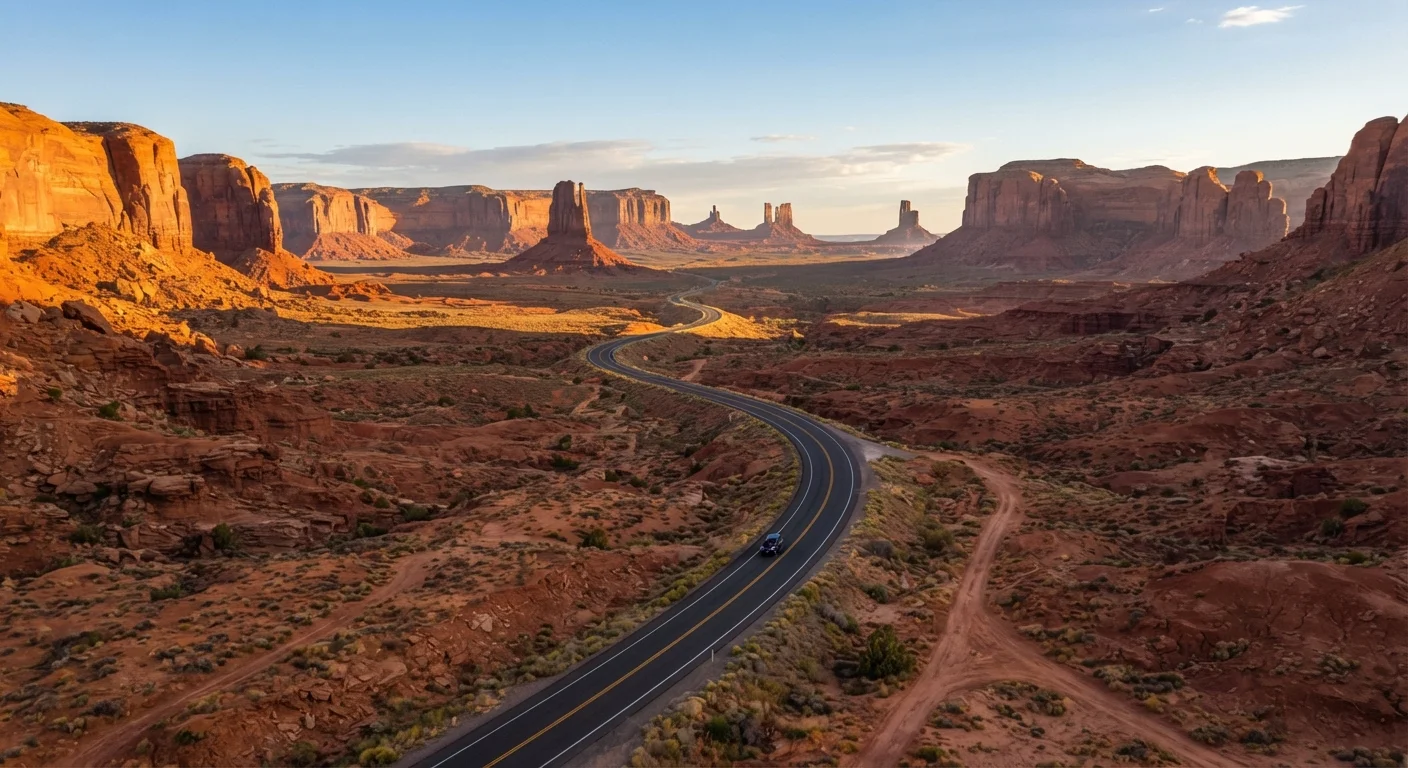
A practical region-by-region overview of how families can explore the Southwest while keeping lodging, food, and activity costs manageable.
Key takeaways
- A seven-day Southwest road trip is achievable for a family of four with deliberate planning and flexible routing.
- National parks passes, free public lands, and dispersed camping can significantly lower lodging and entry costs.
- Shoulder season travel (spring and fall) reduces both crowds and nightly lodging rates across the region.
- Packing a cooler and cooking simple meals cuts daily food costs by a meaningful margin.
- Route sequencing matters: grouping nearby parks and towns reduces fuel costs and wasted drive time.
What this guide covers
The American Southwest, spanning parts of Arizona, Utah, New Mexico, and Nevada, is one of the most photogenic regions in the country. It is also, for families who plan carefully, one of the more manageable road trip destinations in terms of cost. National parks cluster within a few hours of each other, free dispersed camping is available on millions of acres of Bureau of Land Management (BLM) land, and grocery options exist in most gateway towns.
This guide walks through how to structure a seven-day Southwest trip, where costs concentrate, and which decisions have the biggest impact on what you spend. For a broader look at where family road trip money actually goes, see our real cost breakdown of a family road trip.
What you will need
Planning your route before you spend a dollar
Route sequencing is where many families lose money before the trip starts. Driving back and forth across the region to hit every attraction burns fuel and adds nights of lodging. A logical loop from a single hub city (Phoenix, Las Vegas, or Albuquerque are common choices) lets you return the car without a one-way fee and avoids doubling back.
A well-tested seven-day loop from Phoenix, for example, can cover Sedona, the South Rim of the Grand Canyon, Monument Valley, and Mesa Verde before looping back, totaling roughly 1,000 to 1,200 miles. At current federal mileage cost estimates for a mid-size SUV, that fuel figure is predictable and budgetable before you leave home.
Before locking in dates, read our guide to shoulder season savings. April through early June and September through October hit the Southwest when temperatures are comfortable, park entrance queues are shorter, and many lodging rates drop 20 to 40 percent compared to July peaks.
If you are still in the pre-planning stage, our family vacation planning checklist covers booking windows, budget setup, and cost traps to avoid before any money changes hands.
Set a total trip budget and work backward
Before choosing destinations, decide on a total dollar ceiling. A family of four doing seven days in the Southwest typically spends $1,200 to $2,500 all-in, depending on how many nights are spent camping versus in a motel, and how many miles the route covers. Divide that ceiling into four buckets: fuel, lodging, food, and park fees. Adjust the route to fit the math, not the other way around.
Choose a hub city and design a loop route
Pick a single city for your rental car pickup and return. Phoenix, Las Vegas, and Albuquerque each offer access to the core Southwest circuit without long repositioning drives. Map your destinations in geographic order to avoid backtracking. Keep driving days to four hours or fewer to maintain energy for actual activities.
Purchase the America the Beautiful pass before your first park
If your itinerary includes two or more National Park Service sites, buy the $80 annual pass. You can purchase it at the first park entrance you reach, or order it online before departure. Keep the pass accessible in the vehicle; rangers scan it at every entry gate.
Book campgrounds and identify BLM areas before you leave
Reserve National Park campgrounds on Recreation.gov as early as the booking window allows, which is typically six months for high-demand sites. For BLM camping, download the Motor Vehicle Use Maps from the BLM website for each area you plan to visit. These maps show which roads are open to vehicles and where dispersed camping is permitted. No reservation is needed for BLM sites, but identifying locations in advance prevents wasted drive time searching for a spot at dusk.
Stock the cooler at a full-size grocery store before entering rural areas
Major grocery chains are available in Phoenix, Las Vegas, Flagstaff, and Albuquerque. Once you leave those cities, options shrink to convenience stores and tourist-facing shops with significant markups. Buy a week's worth of breakfast and lunch supplies, plus camp dinner ingredients for the nights you plan to cook. Block ice or dry ice keeps a well-packed 48-quart cooler cold for two to three days between restocks.
Plan activities around free and low-cost options within each park
Park entry covers most of what makes the Southwest worth visiting: scenic drives, ranger-led programs, and marked hiking trails. Paid guided tours, horseback rides, and commercial rafting trips can each cost $50 to $150 per person. Treat them as optional additions, not defaults. The free ranger programs at Grand Canyon, Zion, and Bryce Canyon are substantive and worth attending, particularly with children. For more ideas by region, see our no-cost family activity guide.
Track spending daily and adjust if needed
Keep a simple running total in the notes app on your phone: fuel, groceries, lodging, and any paid activities. Check it each evening. If one category is running high, you still have days left to compensate by cooking rather than eating out, or by substituting a free BLM night for a campground with fees. Awareness mid-trip prevents a budget surprise on the drive home.
Lodging: mixing free and low-cost options
Lodging is the largest variable in a Southwest trip budget. A family that books motel rooms every night will spend roughly three to four times more than one that mixes in camping. The region makes that mix practical.
BLM land covers large stretches of southern Utah, northern Arizona, and southern New Mexico. Dispersed camping on BLM land is generally free (up to 14 consecutive days per site), requires no reservation, and puts families directly inside the landscape they came to see. A portable camp stove, sleeping bags, and a tent are the main upfront costs; those items pay for themselves within one trip if you camp even two nights.
For nights when a campground with facilities is worth the cost, National Park Service campgrounds typically run $20 to $35 per site. Reservations on Recreation.gov open months in advance for popular campgrounds such as Mather at the Grand Canyon, so booking early is necessary, not optional.
On nights in gateway towns, independent motels often undercut chain properties. Flagstaff, Moab, and Gallup each have locally owned motel options that run $60 to $100 per night for a family, depending on season, compared to $150 or more for branded hotels. For a wider look at free and low-cost activities that can complement affordable lodging stops, see our regional guide to no-cost family activities.
Entry fees and the America the Beautiful pass
The America the Beautiful annual pass costs $80 per vehicle and covers entrance to all federal lands, including every National Park Service site, for 12 months. A family hitting three or more national parks on a single trip will recover that cost at the gate; the Grand Canyon alone charges $35 per vehicle. If your trip includes the Grand Canyon, Zion, Bryce Canyon, and Mesa Verde, you are past $140 in entrance fees without the pass.
The pass is available at any park entrance or online at the USGS store. Families who plan even one Southwest trip per year and one other national park visit typically come out ahead holding the pass.
Free ranger programs are worth your time
Every national park in the Southwest offers free ranger-led talks, walks, and Junior Ranger programs. These are scheduled daily during peak season and cut down on the need to book paid tours. Check the park's app or the bulletin board at the visitor center each morning for that day's schedule.
Food costs on the road
Restaurant meals in tourist towns carry a predictable markup. A sit-down dinner for four in Moab or Sedona can run $80 to $120 with drinks and tip. Doing that twice a day for seven days adds $1,100 to $1,700 to the trip before you have paid for a single park entry.
A 48-quart cooler stocked at a grocery store before you leave the hub city changes that math. Lunch assembled from deli items, fruit, and bread costs a fraction of any restaurant stop and can be eaten at a scenic pullout rather than a parking lot. Dinner at camp, even with a simple setup, keeps per-meal costs under $15 for a family of four most nights.
Build in one or two sit-down meals per day in towns along the route. Local diners in smaller Southwest towns (Springdale, Kanab, Cortez) tend to run $10 to $15 per person, which is manageable as an occasional spend rather than a default.
Keeping grocery receipts and tracking fuel each fill-up takes five minutes and tells you exactly where the week's money went. That habit also helps when planning the next trip. Our road trip cost breakdown article shows how families typically allocate spending across a week-long drive.
The content provided on our blog site traverses numerous categories, offering readers valuable and practical information. Readers can use the editorial team’s research and data to gain more insights into their topics of interest. However, they are requested not to treat the articles as conclusive. The website team cannot be held responsible for differences in data or inaccuracies found across other platforms. Please also note that the site might also miss out on various schemes and offers available that the readers may find more beneficial than the ones we cover.