
Driving vs. Flying for Family Trips: A Practical Cost Comparison

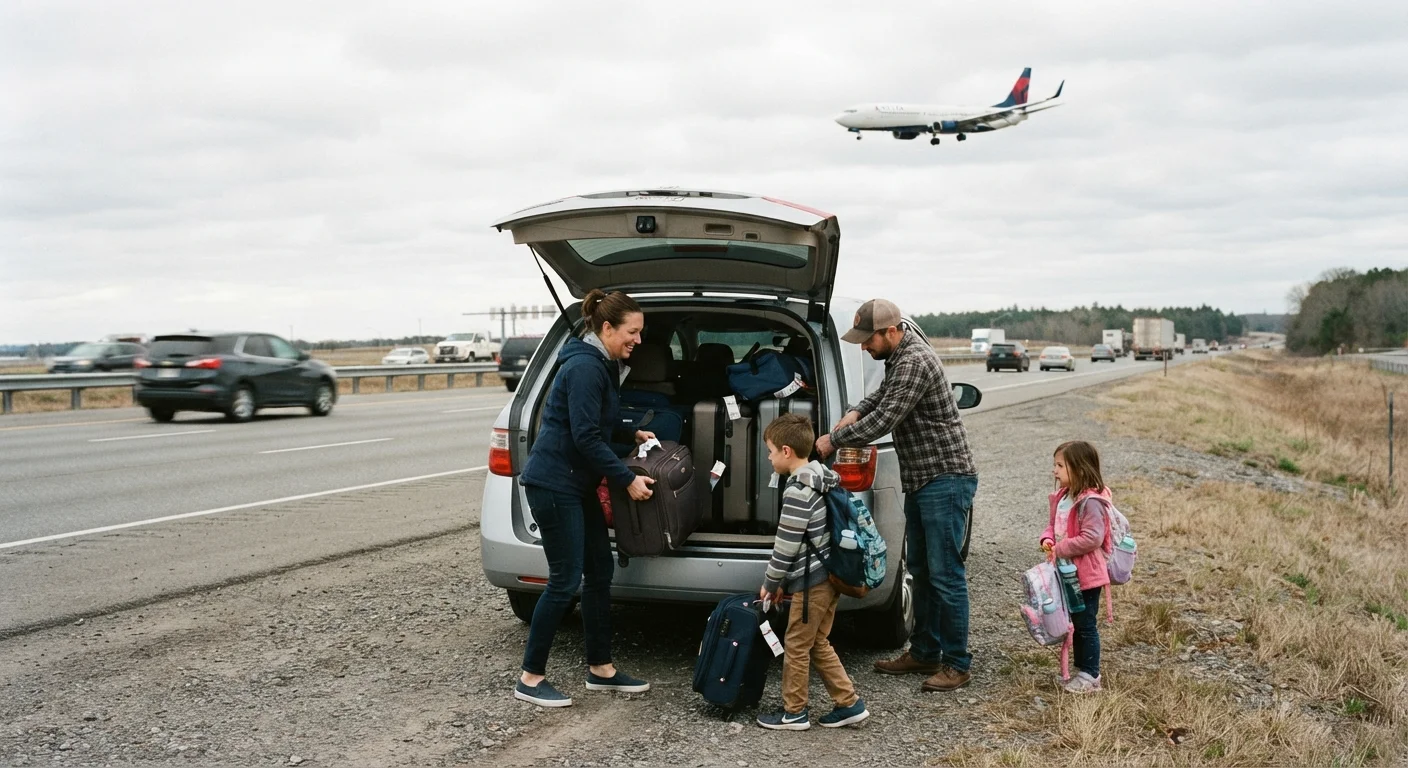
Weigh the true costs of road trips against flying when traveling as a family, including hidden expenses on both sides.
Our Verdict
For trips under 400 miles, driving is almost always cheaper for a family of four, often by a significant margin. Past 600 miles, the calculation becomes genuinely close once overnight lodging, meals, and fuel are added to road-trip costs. Flying pulls ahead in pure dollar terms for very long routes, but only when tickets are booked well in advance and bags are packed light.
| Best for | Recommended |
|---|---|
| Families traveling 400 miles or less | Driving |
| Groups of four or more heading to a destination over 1,000 miles away | Flying (booked 6-8 weeks out, carry-on only) |
| Families with flexible schedules and young children who sleep well in cars | Driving |
| Families with tight vacation time and a fixed destination date | Flying |
Key takeaways
- Flying costs more per person, so the price gap widens fast for families of four or more.
- Driving costs grow with distance; beyond 800 miles, fuel, meals, and overnight stops can rival airfare.
- Hidden fees on both sides, including baggage charges and toll roads, often determine which option is cheaper.
- Time value matters: a 12-hour drive may cost less in dollars but more in stress for families with young children.
- The break-even point shifts depending on fuel prices, airline fare windows, and how many people are traveling.
Why the sticker price misleads both ways
Most families start by comparing a tank of gas to an airfare total, and that comparison is almost always wrong. A round-trip flight for four looks expensive until you add airport parking for a week ($80 to $150 at most major US airports), four checked bags ($35 each way per bag on many carriers), ground transportation at the destination, and the cost of renting a car if you need one. On the driving side, families often forget that a 1,200-mile round trip may require one or two hotel nights each way, plus three to four restaurant meals per travel day.
The only way to compare honestly is to list every spending category for each option and total them up for your specific trip. Hidden costs that quietly inflate a family vacation budget walks through many of these overlooked line items in detail.
| Cost factor | Driving | Flying | |
|---|---|---|---|
| Base transportation cost (family of 4, 1,000-mi round trip) | $120 to $300 (fuel) | $800 to $1,400 (airfare) | |
| Baggage | No added cost | $0 to $280 (checked bags) | |
| En-route lodging | $0 to $480 (hotel stops) | None typically | |
| Ground transport at destination | Vehicle already present | $350 to $630 (rental car, 7 days) | |
| Parking | Varies by destination | $140 to $175 (airport, 7 days) | |
| En-route meals | $100 to $320 (travel days) | Minimal to none | |
| Flexibility and schedule control | High: stop or reroute anytime | Low: tied to airline schedule |
Breaking down driving costs
Fuel is the most visible road-trip cost. A family driving 600 miles round trip in a vehicle averaging 28 MPG will use roughly 21 gallons. At $3.50 per gallon, that is about $74. At $4.20, it is closer to $88. These numbers sound low, but a 1,600-mile round trip in an SUV averaging 22 MPG changes the math substantially: around 73 gallons, or $255 to $307 depending on regional prices.
Meals on the road add up faster than most families expect. A family of four stopping twice a day at a fast-food or casual restaurant can easily spend $50 to $80 per travel day. Add a hotel stay at $110 to $160 per night for a standard room in a mid-size city, and a two-day drive each way adds $320 to $480 to the total before you reach your destination.
Tolls are a regional factor that catches many families off guard. The I-95 corridor from the mid-Atlantic through New England can cost $30 to $50 in tolls each way. The Ohio Turnpike, Pennsylvania Turnpike, and several Texas expressways carry real per-mile charges. Budget these in advance using your state DOT's online toll calculator.
For a granular look at where road-trip money actually goes, see road trip budgeting: what families actually spend.
Breaking down flying costs
A baseline round-trip domestic fare for four passengers ranges widely, but a reasonable mid-range estimate for a 1,000-mile route booked four to six weeks out is $200 to $350 per person, or $800 to $1,400 for the family. That window narrows or widens with demand, season, and how far in advance you book.
Checked bag fees are where the math shifts. Two bags round trip for a family of four at $35 per bag per leg costs $280. A rental car at the destination runs $50 to $90 per day for a mid-size vehicle, which adds $350 to $630 for a seven-day trip. Airport parking at your home airport at $20 to $25 per day for a week adds another $140 to $175, unless a family member can drop you off.
Traveling carry-on only and using public transit or a rideshare at the destination cuts these costs significantly, but that is not always practical with young children, car seats, and a week's worth of gear.
Pack carry-on only to cut flying costs
For a family of four, dropping checked bags entirely can save $280 or more on a round trip. Many families find that packing cubes and one personal item per person per leg covers a week's worth of clothing, particularly in warm-weather destinations where clothes are lightweight. Shipping a box of gear to your destination hotel or vacation rental is another option worth pricing out if you need bulky items like snorkeling equipment or beach toys.
The distance break-even point
As a general framework, driving tends to be cheaper for families when the one-way distance is under 400 miles and no overnight stops are needed. Between 400 and 700 miles, the two options are often close, with the winner depending on fuel prices, airline fare levels, and whether the family needs a rental car at the destination. Past 700 miles each way, a multi-day drive with hotel costs frequently approaches or exceeds the total cost of flying, especially when the destination requires a car anyway.
One factor that tilts toward driving regardless of distance: destination flexibility. A road trip to a national park, a beach with free parking, or a family member's home eliminates most of the destination-side costs that flying incurs. When flying requires a rental car plus lodging (rather than staying with family), the cost comparison shifts further toward driving.
Before committing to either option, run through the pre-booking checklist for family vacations to make sure you have accounted for every cost category before any money changes hands.
Time, stress, and what they cost
Dollars are not the whole story. A 10-hour drive with a 4-year-old and a 7-year-old is a different experience than the same trip with two teenagers who can manage their own entertainment. Families with children who struggle in cars, or who have limited vacation days, often find that the time saved by flying has genuine value, even if it is hard to put a dollar figure on it.
Flying introduces its own friction: arriving at the airport two hours early, navigating security with car seats and strollers, potential delays, and the logistics of traveling with a lap infant or a toddler who cannot stay still. None of this makes flying wrong, but it means the time savings are rarely as clean as they appear on paper.
Lodging choices at the destination also interact with this decision. Vacation rentals vs. hotels for families is worth reading alongside this comparison, since access to a kitchen can offset food costs that vary depending on whether you drove or flew.
The content provided on our blog site traverses numerous categories, offering readers valuable and practical information. Readers can use the editorial team’s research and data to gain more insights into their topics of interest. However, they are requested not to treat the articles as conclusive. The website team cannot be held responsible for differences in data or inaccuracies found across other platforms. Please also note that the site might also miss out on various schemes and offers available that the readers may find more beneficial than the ones we cover.